

Feeling constantly tired can be a sign of anything from underlying medical issues and hormone imbalances to more straightforward lifestyle factors like a poor diet or chronic stress. If you're always feeling drained, it’s your body’s way of flagging that something isn’t quite right. This guide will focus on the actionable steps you can take to fix it.
Why You Constantly Feel Drained
Feeling perpetually wiped out is more than just a side effect of a hectic schedule; it's a serious warning sign. For a lot of men, persistent fatigue is the very first clue that something deeper is at play, messing with the body’s ability to generate and maintain energy. Ignoring it can let a fixable problem turn into something much worse down the line.
Think of your energy like your phone's battery. A busy day might run it down, but a good night’s sleep should bring it back to 100%. If you’re waking up feeling like you’re still on 20%, it suggests the "charger"—your body's fundamental systems—might be faulty. This is exactly why just getting more sleep often doesn't cut it.
The diagram below gives a clear snapshot of the key areas we’ll be exploring in this guide, all of which could be secretly draining your energy.
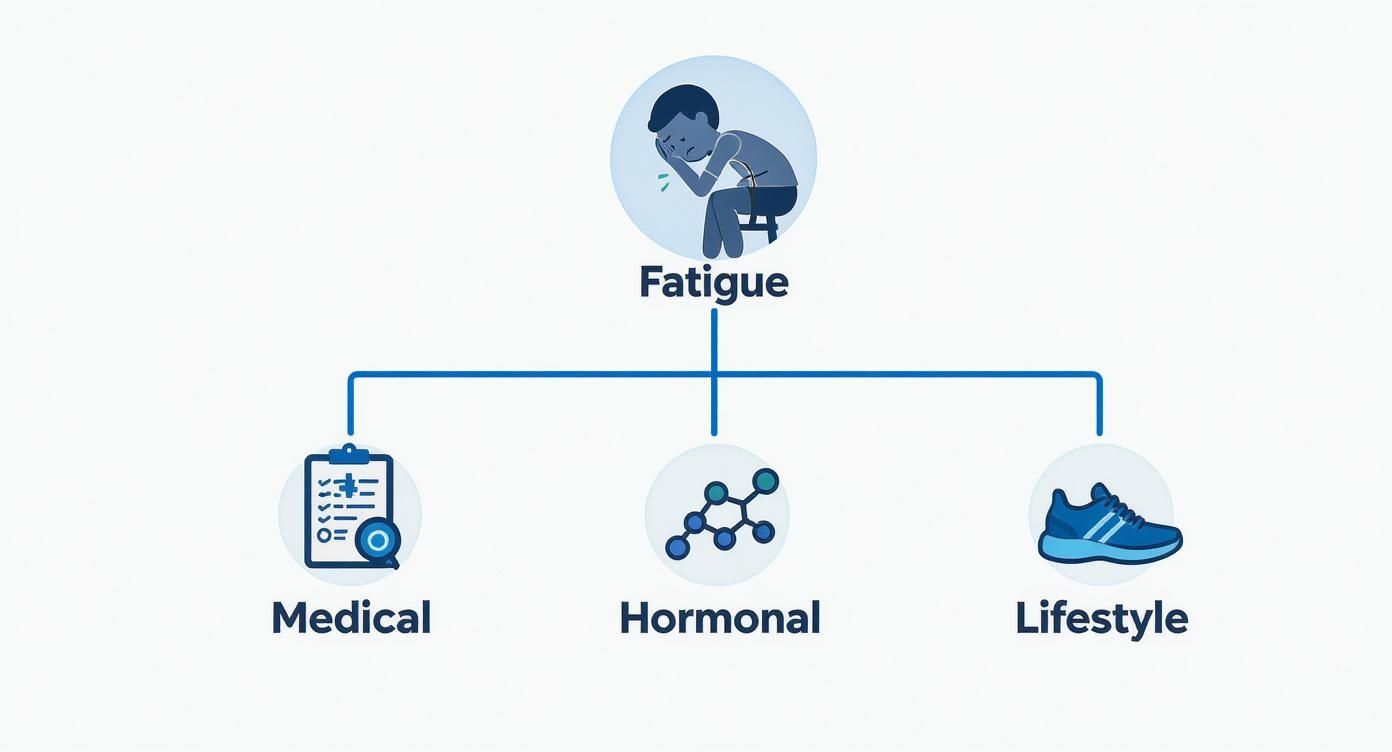
This visual map shows how fatigue stems from three main roots: medical, hormonal, and lifestyle factors. Each one needs a different game plan to diagnose and manage properly.
The Three Pillars of Male Fatigue
Getting a handle on what might be causing your exhaustion is the first big step towards getting your vitality back. The causes typically slot into one of three interconnected categories:
- Underlying Medical Conditions: Sometimes, fatigue is a major symptom of a health issue that requires a doctor's diagnosis. Things like anaemia, thyroid problems, or even sleep apnoea can quietly drain your energy reserves without you ever realising the true culprit.
- Hormonal Shifts and Imbalances: Hormones are like messengers that control everything from your mood to your metabolism. For men, testosterone is a huge player in maintaining energy and stamina. When those levels drop, whether due to age or other factors, fatigue is one of the first and most obvious effects.
- Lifestyle and Environmental Factors: Your daily habits have a massive, direct impact on your energy. This covers everything from what you eat and how well you sleep to how much you move and the way you handle stress.
To help you get started, here’s a quick-glance table to help you spot potential problem areas.
Quick Guide to Common Causes of Fatigue in Men
Use this table to quickly identify potential sources of your fatigue and find the first step to take for each category.
| Category of Cause | Common Signs & Symptoms | First Actionable Step |
|---|---|---|
| Medical | Shortness of breath, dizziness, pale skin, unexplained weight changes, loud snoring. | Schedule a check-up with your GP for a physical exam and blood tests. |
| Hormonal | Low libido, mood swings, difficulty concentrating, loss of muscle mass. | Ask your doctor for a hormone panel blood test to check testosterone levels. |
| Nutritional | Brain fog, cravings for sugary or salty foods, frequent infections, digestive issues. | Keep a food diary for a week and consult a nutritionist or dietitian. |
| Sleep-Related | Waking up tired, daytime sleepiness, irritability, difficulty falling or staying asleep. | Improve your sleep hygiene: set a consistent bedtime, reduce screen time before bed. |
| Mental Health | Lack of motivation, feeling hopeless, loss of interest in hobbies, persistent worry. | Talk to a trusted friend, family member, or mental health professional. |
| Medication Side Effects | New or increased fatigue after starting a new prescription drug. | Review your medications and their side effects with your doctor or pharmacist. |
| Lifestyle | Sedentary daily routine, high stress levels, excessive alcohol or caffeine intake. | Incorporate 30 minutes of moderate exercise into your day and practise a stress-reduction technique. |
This table is a starting point, not a diagnosis. It’s designed to help you think about what might be going on so you can have a more informed conversation with a healthcare professional.
Constant tiredness isn't a sign of weakness; it's a request for investigation. Your body is telling you that one of its core systems—be it medical, hormonal, or lifestyle-related—is out of balance and needs support.
Beyond the physical, mental and emotional factors like stress can be a direct and powerful cause of lasting tiredness, leading to what’s known as stress-induced fatigue. As we dig deeper, you’ll learn how to pinpoint which of these areas might be impacting you. For anyone asking themselves, "why am I always tired and have no energy," our detailed guide can offer more specific insights. This knowledge is your first tool to start taking targeted, effective steps toward feeling like yourself again.
Exploring Hidden Medical Reasons for Male Fatigue
While it’s easy to blame a hectic schedule, sometimes the real reason you’re feeling wiped out runs deeper. Pushing through exhaustion isn’t a badge of honour; it’s a signal to investigate.
Think of it like this: if your car felt sluggish despite having a full tank, you’d get a mechanic to look under the bonnet. Your body deserves the same attention. When rest isn't fixing your fatigue, it's time to consider an underlying medical cause.
Let's dive into three common, yet often missed, conditions that can leave men feeling drained. Recognizing the signs is the first step to having an effective conversation with your GP and getting real answers.
Sleep Apnoea: The Faulty Charger
Imagine plugging your phone in all night, only to wake up and see it’s barely hit 20%. That’s the perfect way to think about sleep apnoea. You might be putting in a full eight hours, but your body isn’t getting the charge it needs.
With sleep apnoea, your breathing actually stops and starts repeatedly while you sleep. These interruptions can happen hundreds of times a night, pulling you out of the deep, restorative sleep your body craves. The result is feeling groggy, foggy, and utterly exhausted the next day.
Actionable Step: If you suspect sleep apnoea, speak to your GP. They can refer you for a simple sleep study, which can often be done in your own bed.
Key Symptoms to Watch For:
- Loud, persistent snoring that keeps your partner awake.
- Waking up gasping or feeling like you’re choking.
- Morning headaches and a dry mouth when you wake.
- Serious daytime sleepiness – like nodding off in meetings or behind the wheel.
Thyroid Disorders: Your Body's Sluggish Metabolism
Your thyroid gland is basically the thermostat for your body, controlling everything from your metabolism to your energy levels. An underactive thyroid, or hypothyroidism, is a major cause of fatigue in men, happening when the gland doesn't produce enough of its crucial hormones.
When thyroid levels are low, your body’s entire energy production line grinds to a halt. It’s like trying to run a marathon on a handful of crisps – you just don't have the fuel.
An underactive thyroid can leave you feeling cold, sluggish, and mentally foggy. The good news? It's easily spotted with a simple blood test from your GP and is usually very manageable with daily medication.
Actionable Step: Describe your symptoms to your doctor and ask for a thyroid function blood test. This simple check can quickly confirm if your thyroid is the issue.
What to Look Out For:
- Putting on weight even though your diet and exercise haven’t changed.
- Feeling the cold when everyone else seems fine.
- Dry skin, thinning hair, and brittle nails.
- Muscle aches, weakness, and even constipation.
Anaemia: The Low Fuel Warning
Anaemia is what happens when you don't have enough healthy red blood cells to carry oxygen around your body. Think of red blood cells as delivery vans carrying oxygen – the essential fuel your cells need for energy. If you're anaemic, you’ve got fewer vans on the road, leaving your muscles and brain starved of fuel.
The most common culprit is a lack of iron. Without enough iron, your body can't make haemoglobin, the specific protein that grabs onto oxygen. This shortfall directly causes that feeling of physical weakness and fatigue.
Actionable Step: Your GP can order a full blood count (FBC) to check for anaemia. If it comes back positive, the next step is to investigate the cause, which could be dietary or related to absorption issues.
Common Signs of Anaemia:
- Pale skin, especially if you look at the inside of your lower eyelids.
- Shortness of breath and a racing heart, particularly after a bit of effort.
- Feeling dizzy or lightheaded.
- Cold hands and feet.
If any of this sounds familiar, don’t just write it off. Your next step should be a visit to your GP. By explaining these specific symptoms, you'll give them the clues they need to run the right tests and get you back on the path to feeling like yourself again.
When Exhaustion Is More Than Just Being Tired
For some men, the fatigue they feel isn't just a sign of a hectic schedule or a few bad nights' sleep. It's a profound, relentless exhaustion that points to something much deeper—a serious chronic illness. This isn't your garden-variety tiredness; it's a debilitating symptom that demands a proper medical investigation.
Unlike the fatigue that can be traced back to something specific like anaemia or a thyroid problem, this level of exhaustion is the illness. We'll look at a couple of prime examples where fatigue is the main event: Myalgic Encephalomyelitis/Chronic Fatigue Syndrome (ME/CFS) and certain neurological conditions.
Getting to grips with these complex illnesses is crucial. It drives home the point that severe, unrelenting tiredness is a legitimate medical issue that needs an accurate diagnosis to even begin managing it effectively. Brushing it off as "just being tired" is a surefire way to delay getting the support and validation you need.
Myalgic Encephalomyelitis/Chronic Fatigue Syndrome (ME/CFS)
Myalgic Encephalomyelitis/Chronic Fatigue Syndrome (ME/CFS) is a severe, long-term condition that throws multiple body systems out of whack. For men living with it, the fatigue is all-consuming and, critically, doesn't get better with rest. It's a distinct biological illness, not something that's "all in your head."
A hallmark of ME/CFS is a phenomenon known as post-exertional malaise (PEM). Imagine your body's energy is like a small, non-rechargeable battery. A healthy person can push their limits and bounce back after a rest. But for someone with ME/CFS, even a tiny bit of exertion can trigger a complete system crash.
This "crash" can be set off by minimal physical or mental effort—a short walk, a trip to the supermarket, or even a deep conversation. The payback is brutal, lasting for days or even weeks, bringing on flu-like symptoms, brain fog, and a bone-deep exhaustion.
Actionable Step: If this severe, post-exertion fatigue describes your experience, it's crucial to seek a diagnosis from a GP who understands ME/CFS. Managing the condition often involves a strategy called 'pacing'—carefully balancing activity and rest to avoid triggering PEM.
Neurological Conditions and Profound Fatigue
Beyond ME/CFS, severe fatigue is also a core symptom of many neurological conditions. Here, the problem lies in the wiring—the communication between the brain, nerves, and muscles is faulty. Conditions like Motor Neurone Disease (MND) or Multiple Sclerosis (MS) often come with an exhaustion that is miles beyond simple tiredness.
This isn't the kind of fatigue a strong coffee can fix. It’s a deep sense of physical and mental weariness that can make simple, everyday tasks feel like climbing a mountain. It happens because the body is constantly fighting, working overtime just to compensate for damaged nerve signals.
When your nervous system is compromised, even basic actions like walking or concentrating require immense effort. The resulting fatigue is a direct consequence of the body's struggle to function against the backdrop of neurological damage.
The fatigue that comes with these conditions often has a few key characteristics:
- Sudden onset: Energy levels can tank without any warning.
- Heat sensitivity: Symptoms often get much worse in warmer weather.
- Cognitive drain: Thinking hard can be just as draining as physical activity.
Among chronic illnesses that cause this level of exhaustion, conditions like Dysthymia, a persistent form of depression, can also be a major player. Getting a better handle on understanding Dysthymia (Persistent Depressive Disorder) can offer valuable insights. If your fatigue is severe, relentless, and showing up with other neurological signs like muscle weakness or trouble with coordination, it’s time for a thorough medical check-up.
How Hormone Imbalances Can Drain Your Energy
Think of your hormones as the backstage crew for your body's daily performance. They're silently managing everything from your mood to your muscle mass. For men, testosterone is the director of this entire operation, playing a lead role in maintaining energy, drive, and mental sharpness.
When these hormone levels get out of sync, the whole production can grind to a halt, leaving you feeling constantly drained and off your game.
This isn't just about being a bit tired after a tough week. A hormonal imbalance like low testosterone (often called 'Low T') can be a core cause of fatigue in men. It's that bone-deep exhaustion that sleep just can't seem to touch, often paired with a frustrating lack of motivation that makes even simple jobs feel like climbing a mountain.
Figuring out what's going on is the first step to getting your energy back. It’s all about recognising the signals and knowing what to do next.
The Low Testosterone Effect
Low testosterone doesn't just make you physically tired; it hits your mental and physical stamina right across the board. For most men, testosterone levels naturally start to dip by about 1% per year from around the age of 30. But for some, lifestyle factors or other medical issues can speed this up.
When your testosterone is running low, you might notice a whole host of symptoms that go way beyond simple tiredness. Each one is a clue pointing towards a potential hormonal cause.
Key Signs to Watch For:
- Brain Fog and Poor Concentration: Suddenly finding it hard to focus at work or struggling to remember details? That could be low testosterone affecting your cognitive function.
- Reduced Motivation and Drive: If that competitive edge or get-up-and-go has vanished and been replaced by apathy, your hormones could be to blame.
- Loss of Physical Stamina: Workouts feel tougher, recovery takes longer, and you might even notice you’re losing a bit of muscle mass and strength.
Low T is like trying to run your life on a low battery. Everything still works, but it’s slower, weaker, and just not as efficient. That persistent fatigue is often your body’s alarm bell, signalling that its main power source is getting low.
This condition is known medically as male hypogonadism, and it happens when the body simply isn't making enough of this crucial hormone. The problem can start in the testicles or with the brain's signalling system that’s meant to control hormone production. It's a surprisingly common issue, but one that often goes undiagnosed.
If you want to dive a bit deeper, you can learn more about the specific signs of low testosterone in our related article.
Taking Action on Hormonal Fatigue
If any of this sounds familiar, the next move is to get clarity. Don't just write off constant tiredness as a normal part of getting older. The best way to start investigating is by having a straightforward chat with your GP.
Your doctor can arrange a simple blood test, often called a hormone panel. This test is usually done in the morning when testosterone levels are at their peak, and it gives a clear snapshot of your hormonal health.
Once you have the results, you and your doctor can figure out a plan. Sometimes, a few simple lifestyle changes can make a massive difference.
Actionable Steps You Can Take:
- Prioritise Sleep: Make 7-9 hours of quality sleep a non-negotiable. This is primetime for your body's testosterone production.
- Manage Stress: Chronic stress pumps out cortisol, a hormone that actively suppresses testosterone. Find what works for you—whether it's walking, meditation, or just making time for hobbies you enjoy.
- Focus on Nutrition and Exercise: A balanced diet and regular strength training are fantastic, natural ways to support healthy hormone levels.
In some cases, your doctor might discuss medical treatments like Testosterone Replacement Therapy (TRT), but that's a decision to be made together. It’s also important to remember that while hormones are a major player, fatigue in men across the UK can sometimes be linked to more complex underlying conditions.
For instance, studies have shown that fatigue is an almost universal experience for men with Motor Neurone Disease (MND), which highlights why severe, persistent exhaustion should always be investigated properly. The key is not to self-diagnose, but to use this information to have a productive, informed chat with a medical professional.
The Link Between Your Diet and Your Daily Stamina
What you eat is so much more than a way to quiet a rumbling stomach—it's the very fuel that powers every single thing your body does. Think of your diet like the specific type of petrol your body's engine is built for. If you keep putting in low-grade fuel, it’s only a matter of time before the engine starts to splutter and stall, leaving you feeling sluggish and totally drained.
This direct line between food and energy is one of the most common reasons men feel so wiped out. A diet loaded with processed foods, sugar, and unhealthy fats sends your energy levels on a rollercoaster, spiking you up only to crash you down harder than before. More importantly, it can create critical nutritional gaps that hobble your body’s ability to generate energy right down at the cellular level.
The Micronutrients That Power Your Engine
While every nutrient has a job, a few key players are absolutely essential for keeping fatigue at bay. When these run low, it’s like trying to start a fire with damp wood—you’re just not going to get the spark you need.
- Iron: This mineral is the backbone of haemoglobin, the protein in your red blood cells that ferries oxygen around your body. Without enough iron, your cells are starved of oxygen, which leads directly to that feeling of physical weakness and brain fog.
- B Vitamins (especially B12): Think of these as the mechanics in your cellular energy factories. They are responsible for converting the food you eat into usable energy. When you're low on B vitamins, that whole process grinds to a halt.
- Magnesium: This mineral is a true powerhouse, involved in over 300 different processes in the body, from creating energy to helping your muscles function and even regulating your sleep. It’s a workhorse for your daily stamina.
A shortfall in any of these can leave you feeling exhausted, no matter how much sleep you get. The good news is that these deficiencies can often be fixed with a few simple, smart changes to what you eat.
Your body is constantly sending you signals about what it needs. Persistent fatigue is often its loudest and clearest signal that your nutritional fuel tank is running on empty and needs a high-quality top-up.
Magnesium, in particular, is a growing problem. It's emerging as a major reason for fatigue among men in the UK, with new data showing that over a third of British adults might have less-than-ideal magnesium levels. A comprehensive report revealed that an estimated 35% of UK adults are dealing with magnesium deficiency, a state that directly impacts energy, muscle function, and brain health. You can read more about the study on UK magnesium levels at wecovr.com.
Actionable Food Strategies to Boost Your Energy
You don’t need to completely overhaul your life to fight back against nutritional fatigue. It all starts with making small, consistent choices to get more energy-rich foods onto your plate. Instead of worrying about what you have to cut out, just focus on the powerful ingredients you can add in.
For a more detailed look at specific meals and ideas, our guide on foods that fight fatigue has you covered with practical recipes and tips.
To get you started, let's look at the key nutrients you need to be getting, what they do, and where you can find them.
Essential Nutrients to Boost Your Energy
| Nutrient | Its Role in Your Energy | Best Food Sources |
|---|---|---|
| Magnesium | Helps convert food into energy and supports muscle and nerve function. | Spinach, nuts (almonds, cashews), seeds (pumpkin, chia), avocado, and dark chocolate. |
| Iron | Vital for carrying oxygen to your muscles and brain, preventing both physical and mental exhaustion. | Lean red meat, poultry, beans, lentils, tofu, and fortified breakfast cereals. |
| B Vitamins | Essential for the metabolic processes that turn carbohydrates and fats into fuel. | Eggs, dairy products, salmon, beef, and leafy greens like kale and spinach. |
By making a conscious effort to include these foods in your daily meals, you're giving your body the tools it needs to build and sustain real energy. This is how you tackle one of the most common causes of fatigue in men, head-on.
Your Action Plan to Overcome Fatigue

Knowing what might be causing your fatigue is a great start, but real change only happens when you turn that knowledge into action. This is your no-nonsense guide to getting your energy back, built on real-world strategies you can start using today. We’ll focus on three core areas that deliver the biggest bang for your buck when it comes to vitality.
This isn’t about a complete life overhaul overnight. It’s about making small, smart adjustments that create a powerful ripple effect. By dialling in on these key pillars, you can start rebuilding your energy reserves and finally get the upper hand on exhaustion.
Master Your Sleep Hygiene
Good quality sleep is the cornerstone of fighting fatigue, and it’s about so much more than just how many hours your head is on the pillow. Truly restorative sleep needs a game plan, especially if your body’s natural rhythm feels completely off-kilter. The goal is to build a rock-solid pre-sleep routine that tells your body it’s time to shut down.
First things first: set a strict digital curfew. That blue light from your phone, tablet, and TV messes with melatonin, the hormone that runs your sleep-wake cycle. Power everything down at least 60-90 minutes before you want to be asleep.
Use that screen-free time to properly wind down. Grab a physical book, listen to some calming music, or do some light stretching. The secret here is consistency—doing this every night trains your brain to associate these simple acts with rest.
Think of your wind-down routine as a cool-down for your brain. You wouldn't finish a sprint and immediately lie down; your mind needs that same gradual shift from the buzz of the day to a state of complete rest.
Manage Your Stress Proactively
When you're constantly stressed, your body is stuck in high-alert mode, pumping out cortisol and adrenaline. This "fight or flight" response is absolutely exhausting and a major cause of fatigue. The trick is to get ahead of your stress, rather than just reacting when you’re already feeling swamped.
One of the best tools in your arsenal is simple movement. When you feel that stress starting to build, a quick 10-15 minute walk can be a game-changer. This isn't about a hardcore workout; it's just about breaking the mental cycle by changing your scenery and getting your body moving.
Try to pepper brief mindfulness or breathing exercises throughout your day. You can do this right at your desk. Give the box breathing technique a go:
- Breathe in for a count of four.
- Hold that breath for a count of four.
- Breathe out for a count of four.
- Hold again for a count of four.
Just a few cycles of this can help reset your nervous system, pulling you out of that high-stress state and saving you precious mental and physical energy.
Move Your Body Intelligently
It sounds backwards, but the right kind of physical activity is one of the most powerful energy boosters out there. Intelligent movement isn't about punishing yourself with workouts that leave you wiped out. It’s about consistent, moderate activity that gets your blood pumping, lifts your mood, and even helps you sleep better.
Aim for 30 minutes of moderate exercise on most days. This could be anything from a brisk walk or a bike ride to a session with weights. Just find something you actually enjoy, because that's what you'll stick with.
And listen to your body. If you feel totally drained after exercising, you might be overdoing it or dealing with something else that needs a doctor's attention. The goal is to finish feeling more energised, not less. By nailing your sleep, managing stress, and moving smartly, you're building a powerful foundation to beat fatigue for good.
Your Questions About Fatigue Answered
Let's clear up some of the most common questions and worries men have about feeling constantly tired.
Can Stress Really Make Me Physically Exhausted?
One hundred percent, yes. Imagine running your car's engine at full throttle, non-stop. That's what chronic stress does to your body. It keeps you in a constant 'fight or flight' mode, pumping out hormones like cortisol that, over time, just completely drain your systems.
This isn't just in your head; it creates real, physical burnout. You might feel it as muscle weakness, a foggy brain, or just sheer exhaustion. Getting a handle on your stress is one of the most powerful things you can do to get your energy back.
When Should I Actually Go and See a Doctor?
If you've been feeling this drained for more than two weeks and getting more rest isn't helping, it's time to book an appointment with your GP. You should also be on high alert for any other 'red flag' symptoms cropping up, like losing weight without trying, night sweats, or feeling short of breath.
Don't just dismiss persistent tiredness as a normal part of getting older or having a busy life. It's often the first warning sign your body gives you. A simple blood test can be a game-changer, quickly spotting many of the usual suspects.
I'm Worried Exercise Will Just Make Me More Tired
This is a classic catch-22, and the answer really depends on why you're tired. For that general, lifestyle-driven fatigue, a bit of moderate exercise is one of the best energy boosters out there. It gets your circulation going, improves your mood, and helps you sleep more deeply.
However, if an underlying condition like ME/CFS is the culprit, the wrong type or amount of exercise can make you feel much worse. The most important rule here is to listen to your body. Start small with something low-impact, like a gentle walk. If you feel wiped out for more than a day afterwards, pull back and speak with your doctor.
At Oji Shilajit, we know that the demands of modern life can strip your body of essential nutrients, hitting your energy and vitality hard. Our Shilajit gummies are made to help you restore that natural balance. They're designed to support your energy levels, sharpen your focus, and help you manage stress. Take back your vitality by visiting us at https://myoji.co.uk.


