

Struggling to remember where you left your keys? Finding it tough to recall key points from an important meeting? It’s a common frustration, but here’s the good news: your memory isn't set in stone.
Learning how to improve memory retention is less about magic tricks and more about applying a smart blend of powerful cognitive techniques, like active recall, and building solid lifestyle habits, like quality sleep and regular exercise. This guide gives you practical, actionable strategies you can start using today.
A Practical Guide to Enhancing Your Memory

It’s easy to feel like your memory is just something you’re born with. The truth is that it's a dynamic skill. Your brain's ability to lock in, store, and pull up information when you need it is a process you can actively strengthen and support.
This guide is your starting point for building a sharper, more reliable memory. We’ll cut through the noise and focus on the core pillars that are backed by solid evidence and proven to work. For a deeper dive into these fundamentals, you might also find this a comprehensive guide on how to improve memory retention useful.
What We Will Cover
Instead of getting lost in abstract theories, we’ll break down the most effective methods into manageable, actionable steps. You'll learn a complete system for better cognitive function, covering:
- Powerful Cognitive Techniques: Discover methods like active recall and spaced repetition to make learning stick.
- Foundational Lifestyle Habits: Understand the massive impact of sleep, exercise, and stress on your brain’s health.
- Brain-Boosting Nutrition: Learn how specific foods and supplements can give your mind the fuel it needs to perform at its peak.
- Actionable Weekly Plans: Get a clear framework for weaving these strategies into your daily routine for real, lasting progress.
Think of it this way: you’re not just cramming for a single test. You’re building a sustainable framework for lifelong learning and recall. By focusing on these core areas, you create an environment where your brain can truly thrive.
To give you a quick overview, here are the key pillars we'll be exploring.
Key Strategies for Better Memory Retention
| Strategy Pillar | What It Involves | Primary Benefit |
|---|---|---|
| Cognitive Techniques | Using methods like retrieval practice, spaced repetition, and mnemonics to actively engage with information. | Strengthens neural pathways, making information easier to recall and retain long-term. |
| Lifestyle Habits | Prioritising 7-9 hours of quality sleep, getting regular physical exercise, and managing stress levels. | Supports brain plasticity, reduces cognitive fog, and improves the brain's ability to consolidate memories. |
| Nutrition & Supplements | Eating a brain-healthy diet rich in omega-3s and antioxidants. Exploring adaptogens and nootropics. | Provides essential nutrients for brain cell health, reduces inflammation, and enhances focus and clarity. |
Each of these pillars plays a vital role in building a robust memory. In the sections that follow, we'll get into the specifics of each one, giving you the practical advice you need to get started right away.
Mastering Cognitive Techniques for Stronger Recall

To improve your memory, get active. Simply rereading your notes is a passive act that doesn’t build the strong neural pathways needed for solid recall. It’s time to move beyond that and start actively engaging your brain with proven cognitive techniques.
Think of it this way: your brain remembers what it has to work for. Passively scanning information is like walking down a familiar path—it’s easy, but it doesn't build any new strength. Forcing yourself to retrieve that information is like forging a new trail—it’s harder, but it creates a much stronger, more permanent connection.
Embrace Active Recall to Solidify Knowledge
Active recall, or retrieval practice, is the simple act of deliberately pulling information out of your memory. Studies consistently show it’s far more effective than just rereading. Instead of glancing over your notes, close the book and try to explain the key points out loud or scribble them onto a blank page.
Every time you successfully retrieve a piece of information, you strengthen the neural connections tied to it, making it easier to access next time.
Here are actionable ways to use active recall:
- Quiz Yourself: After reading a chapter or finishing a meeting, jot down a few questions about the main ideas. Test yourself later that day.
- Teach Someone Else: Explain what you’ve learned to a friend. This forces you to organise the information logically and instantly reveals any gaps in your understanding.
- Use Flashcards: They’re a classic for a reason. Use flashcards to practise active recall for facts, vocabulary, or key definitions.
The real magic is in the effort. That struggle to remember signals to your brain that this information is important and worth hanging on to. It flips learning from a passive act of consumption into an active process of construction.
To truly get to grips with new material, it’s also crucial to have a system for tackling dense resources. Apply proven strategies to study textbooks for maximum retention and genuine understanding.
Use Spaced Repetition for Long-Term Learning
Now, pair active recall with smart timing. Spaced repetition is a method for reviewing information at increasingly longer intervals. Instead of cramming, you test yourself on a concept just as you’re about to forget it. This interruption in the forgetting process is what locks the memory in for the long haul.
For example, review a new concept one day after learning it, then again three days later, then a week later, and so on. This is an incredibly efficient way to learn because you focus your energy on the information that actually needs reinforcing.
Create Powerful Mnemonic Devices
Mnemonics are memory shortcuts that connect new information to something you already know, making complex details more memorable. Research from the UK’s National Survey of Health and Development found that participants who regularly used cognitive strategies like these showed a 20% lower rate of memory decline.
Here are two popular types to try:
- Acronyms: Create a word from the first letters of a list, like ROY G. BIV for the colours of the rainbow.
- The Memory Palace: Visualise a familiar place, like your home, and mentally ‘place’ the things you need to remember in specific spots. To recall them, take a mental walk through your palace.
By weaving these cognitive strategies into your routine, you’re not just learning—you’re building a powerful, reliable system for memory retention. For more tips on sharpening your mind, read our guide on how to improve cognitive function.
Building the Lifestyle Foundations of a Resilient Memory

While cognitive techniques are powerful, they're only half the story. The real bedrock of a sharp, reliable memory is built on your everyday lifestyle choices.
Think of your brain like a high-performance engine. It needs the right fuel, proper maintenance, and enough downtime to run at its best. The core pillars of sleep, exercise, and stress management are direct, practical ways to improve memory retention. By getting these foundations right, you create the perfect internal environment for your brain to lock in new information.
Prioritise Sleep for Memory Consolidation
Sleep isn’t just your brain switching off. It's a critical period where your mind organises and solidifies the day's events into long-term storage. During deep sleep, your brain replays neural patterns from when you were awake, strengthening the connections that form lasting memories.
When you get less than the recommended 7-9 hours of sleep, you rob your brain of this vital consolidation time. It’s why you might wake up with that familiar mental fog, where everything you learned yesterday feels just out of reach.
Here's how to improve your sleep hygiene tonight:
- Create a Tech-Free Zone: Banish screens from the bedroom. The blue light from phones and tablets interferes with your natural sleep-wake cycle.
- Stick to a Schedule: Go to bed and wake up around the same time each day—even on weekends. This helps to regulate your body's internal clock.
- Wind Down Properly: Dedicate the last 30 minutes before bed to something calming. Read a physical book, do gentle stretching, or listen to quiet music.
Get Moving to Boost Brain Health
Getting your body moving is one of the most effective things you can do for your cognitive health. Regular exercise increases blood flow to the brain, delivering the oxygen and nutrients it needs to grow new neurons and forge stronger connections between them. This process is fundamental for both learning and memory.
You don't need to train for a marathon to feel the benefits. Just 30 minutes of moderate activity, like a brisk walk, a few times a week can make a huge difference. In fact, long-term data from the Aberdeen Children of the 1950s Study showed that adults who maintained regular physical activity had a 25% higher chance of performing well on delayed memory tests. You can dive into the details of this fascinating study on physical activity and memory yourself.
The link couldn't be clearer: a healthy body supports a healthy mind. When you move, you're not just working your muscles; you're actively building a more resilient, efficient brain.
Manage Stress to Protect Your Cognitive Function
Chronic stress is memory’s worst enemy. When you're constantly on edge, your body is flooded with cortisol, a hormone that can damage the hippocampus—the very part of your brain that’s vital for learning and memory. This is why you find it almost impossible to recall even simple information when you’re feeling overwhelmed.
Learning to manage that stress is a non-negotiable strategy for protecting your memory. It helps lower damaging cortisol levels, allowing your brain to function without interference.
Here are a few practical ways to reduce stress:
- Practise Mindfulness Meditation: Just five minutes of focusing on your breath can calm your nervous system and sharpen your ability to concentrate.
- Use Deep Breathing Exercises: The next time you feel stressed, stop and take a few slow, deep breaths. This simple action can lower your heart rate and bring an immediate sense of calm.
- Spend Time in Nature: A quick walk in a park or green space can reduce mental fatigue and restore your focus, giving you a much-needed break from the daily grind.
By weaving these habits into your life, you’re not just hoping for a better memory—you’re actively building one, day by day.
Nourishing Your Mind for Better Cognitive Function
Think of your brain like a high-performance engine. You wouldn't put low-grade fuel in a performance car, so why would you do that to your mind? The food on your plate has a direct impact on your cognitive function, influencing everything from your focus to how well you form memories.
A serious attempt to improve memory retention must include what you eat. A balanced, brain-friendly diet gives your neurons the essential building blocks they need to thrive and protects them from daily wear and tear. Prioritising certain nutrients creates an internal environment that actively supports memory and learning.
Fuel Your Brain with Essential Nutrients
Some foods are packed with compounds that are brilliant for cognitive health. Making them a regular feature in your diet is one of the most powerful, practical steps you can take towards a sharper mind.
Here are the key food groups to focus on:
- Oily Fish: Eat salmon, mackerel, and sardines. They’re high in omega-3 fatty acids, a major structural component of your brain cells. These fats are vital for healthy cell membranes, which is crucial for communication between neurons.
- Berries and Leafy Greens: Add foods like blueberries, spinach, and kale to your diet. They are loaded with antioxidants and flavonoids. These powerful compounds act like a security team for your brain, protecting it from oxidative stress – a type of cellular damage that contributes to cognitive decline.
- Nuts and Seeds: Choose walnuts and flaxseeds as fantastic plant-based sources of omega-3s. On top of that, many nuts and seeds provide vitamin E, an antioxidant that helps shield your brain cells from harm.
If you’re looking for a simple rule of thumb, think in terms of colour and variety. A plate filled with deep greens, rich blues, and other vibrant colours isn't just nice to look at—it’s a sign you’re giving your brain a wide range of protective nutrients.
The Role of Supplements in Cognitive Support
While a food-first approach is always best, our modern diets sometimes fall short. This is where targeted supplements can play a supportive role in a complete wellness plan, helping to fill nutritional gaps.
Adaptogens—natural substances that help your body adapt to stress—are particularly useful. We all know stress is a major enemy of memory, and adaptogens offer a natural way to build your resilience.
- Lion’s Mane: This mushroom has been studied for its potential to support nerve growth factor (NGF), a protein essential for the growth and survival of brain cells. Many people use it for a noticeable boost in focus and mental clarity. You can dive deeper into the specific Lion's Mane mushroom benefits in our detailed guide.
- Ashwagandha: As a cornerstone of Ayurvedic tradition, Ashwagandha is famous for its ability to help lower cortisol levels and promote a sense of calm. This, in turn, helps protect the brain from the memory-disrupting effects of chronic stress.
Another substance gaining attention is Oji Shilajit. It’s a mineral-rich resin that contains fulvic acid and over 85 trace minerals. Traditionally, it’s been used to support vitality and energy, but its comprehensive mineral profile is what’s really interesting. It helps restore the essential nutrients our bodies—including our brains—need to function at their best.
By nourishing your mind with both a nutrient-dense diet and smart, informed supplement choices, you create a powerful foundation for a resilient and reliable memory.
Creating Your Weekly Memory Enhancement Plan
Knowing the best memory techniques is great, but putting them into consistent practice is what really builds a sharper mind. A structured weekly plan turns these abstract ideas into solid, manageable habits. The goal isn't to be perfect; it’s to be consistent.
Weave small, deliberate actions into the routine you already have.
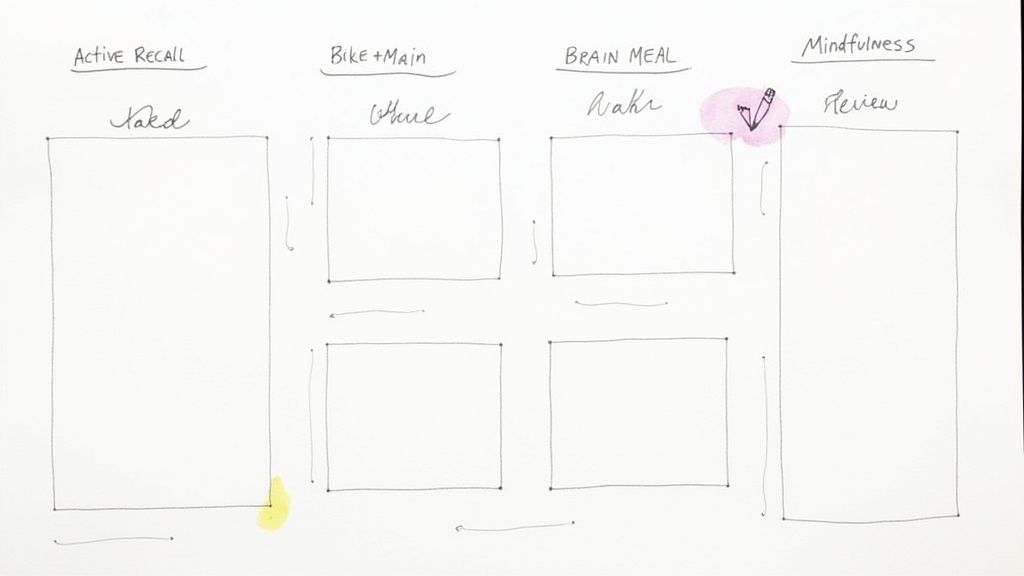
This simple blueprint brings together the cognitive, physical, and wellness pillars we’ve been talking about into a customisable schedule. When you assign specific activities to certain days, you reduce decision fatigue and make it much easier to stick with the programme. The real secret? Start small and let the momentum build.
Designing Your Personalised Routine
Everyone’s life is different, so a one-size-fits-all plan is doomed to fail. A busy professional’s routine will look different from a student’s. The important thing is to adapt these principles to your life, focusing on what’s realistic for you right now.
For example, a professional might use their commute to practise active recall on meeting notes. A student could schedule a dedicated flashcard session between lectures. The core activities don't change, but how you fit them in does.
The most effective plan is the one you can actually follow. It’s far better to commit to 15 minutes of focused cognitive practice three times a week than to aim for an hour every day and give up after a week.
To give you a clearer idea of how this could look, here is a sample template. Think of it as a starting point—feel free to adjust it to match your own goals and schedule.
Sample Weekly Memory Enhancement Routine
Here’s a practical look at how you might integrate these memory-boosting activities into your week.
| Day | Cognitive Focus (20 mins) | Physical Activity (30 mins) | Wellness Goal |
|---|---|---|---|
| Monday | Active recall on a new work skill or study topic from last week | Brisk walk during lunch break | Eat a brain-healthy meal with oily fish or nuts |
| Tuesday | Use the memory palace technique to memorise a short list or process | Bodyweight strength training | 10 minutes of mindfulness meditation before bed |
| Wednesday | Explain a complex concept you're learning to a colleague or friend | Rest day or gentle stretching | Ensure 7-8 hours of quality sleep |
| Thursday | Review flashcards using spaced repetition for challenging topics | Jogging or cycling | No screens for 30 minutes before sleeping |
| Friday | Write a one-page summary of everything you learned this week | Yoga or a long walk | Reflect on progress and adjust next week's plan |
This kind of structure gives you a balanced approach, making sure you’re consistently working on all the key areas that support better memory. Over time, these small daily actions will compound, creating significant and lasting improvements in your ability to learn and recall information effectively.
Got Questions About Improving Your Memory?
When you start making changes to boost your memory, it's natural to have questions. Knowing what to expect, what works, and where to focus your energy can make all the difference. Let's tackle some of the most common ones.
How Long Until I Actually Notice a Difference?
While you might feel sharper after just one good night's sleep, seeing real, lasting improvements in your ability to remember things usually takes about four to six weeks of consistent effort.
Real change comes from building solid habits around how you learn, move, and eat. The key here is consistency, not cramming everything into one intense week.
Do Brain-Training Apps Really Work?
Brain-training apps can be a fun way to sharpen specific cognitive skills, like your working memory or information processing speed. Think of them as a targeted workout for your brain.
However, they’re a supplement, not the whole solution. You can't replicate the deep benefits of quality sleep, regular exercise, and a nutrient-rich diet with an app. Use them as an add-on to your main efforts, not a replacement.
What Are the Best Foods for My Brain?
Instead of hunting for one "superfood," focus on building a diet that’s consistently packed with brain-healthy ingredients. A balanced approach is always better.
- Oily Fish: Eat salmon and mackerel. They’re full of omega-3s, which are the building blocks of your brain cells.
- Berries: Blueberries are fantastic. They're loaded with antioxidants that help protect your brain from daily wear and tear.
- Leafy Greens, Nuts, and Seeds: These provide a huge range of vitamins and minerals that your brain needs to function at its best.
A Mediterranean-style diet is a great model to follow because it naturally includes all these important food groups. Making these kinds of dietary shifts is also a brilliant first step if you're trying to figure out how to clear brain fog and get that feeling of mental clarity back.
Ready to give your brain the essential nutrients it needs for peak performance? Oji Shilajit gummies are formulated with over 85 trace minerals and powerful adaptogens like Ashwagandha and Lion's Mane to support your mental clarity, focus, and energy naturally. Restore your vitality and sharpen your mind by visiting https://myoji.co.uk today.


