
Overcoming chronic fatigue syndrome is a process of managing your symptoms and working with your body, not pushing through exhaustion. The first step is to get a proper medical diagnosis to understand your new limits. From there, you can work with your doctor to implement practical strategies like energy pacing and improving sleep. This guide provides the actionable steps to help you start rebuilding your life.
Your First Steps with ME/CFS
When you first face Myalgic Encephalomyelitis/Chronic Fatigue Syndrome (ME/CFS), the path forward can seem unclear. Your most critical first step is to secure a definitive medical diagnosis. This isn't just about naming your condition; it's about creating the essential foundation for every management technique you'll use. Without it, you're guessing, and you risk overlooking another treatable illness.
Start by booking an appointment with your GP. The objective is to partner with them to uncover what's happening in your body. This requires you to move beyond saying "I'm tired" and learn to articulate the specific, debilitating nature of ME/CFS fatigue.
Prepare for Your Doctor’s Visit
To make your appointment effective, you must arrive prepared. Vague feelings are hard to diagnose; concrete details are not. Start a simple log of your symptoms, focusing on the key indicators of ME/CFS.
- Log Post-Exertional Malaise (PEM): Note every time a small amount of physical, mental, or emotional effort triggers a symptom crash 24-48 hours later. Example: "Walked for 10 minutes Tuesday; bedridden Wednesday and Thursday."
- Describe Unrefreshing Sleep: Detail how you feel upon waking. Do you feel as though you haven't slept, regardless of the hours spent in bed? This is a hallmark of ME/CFS.
- Track Cognitive Issues ("Brain Fog"): Record instances of struggling for words, forgetting recent information, or being unable to focus on simple tasks like reading.
- List Other Symptoms: Keep a running list of other recurring issues like muscle aches, a persistent sore throat, headaches, or dizziness upon standing.
Treat your symptom diary as a crucial tool. It transforms your subjective experiences into objective data, helping your doctor identify the distinct patterns of ME/CFS.
The Diagnostic Process: What to Expect
There is no single test for ME/CFS. Diagnosis is a process of elimination. Expect your GP to order a series of blood tests to rule out other conditions with similar symptoms, such as thyroid disorders, anaemia, or autoimmune diseases.
After ruling out other possibilities, your doctor will analyze your symptom log against the official diagnostic criteria for ME/CFS. This process may require several appointments.
Be aware that getting a diagnosis can be challenging. In the UK, diagnosis rates for ME/CFS vary significantly by region. Research examining 42 English health boards revealed these disparities, also noting that white individuals are diagnosed more frequently than those from other ethnic backgrounds, highlighting inequities in healthcare. You can read more about these findings on healthline.com.
Obtaining this medical baseline is your non-negotiable starting point. It provides the confirmed diagnosis you need to begin applying the right strategies to manage your condition and overcome chronic fatigue syndrome.
Master Pacing: Your Core Energy Management Skill
Pacing is the single most important skill for managing chronic fatigue syndrome. It requires a complete shift in mindset, moving away from "pushing through" and towards working with your body. By respecting your new, smaller energy limits, you can avoid the debilitating crashes known as post-exertional malaise (PEM).
Think of your daily energy as a phone battery that never charges beyond 50% and recharges very slowly. Every activity—showering, making a call, reading—drains this battery. Pacing is the skill of using this limited energy wisely to avoid hitting zero.
Find Your Energy Baseline
The first practical step in pacing is to determine your current energy "envelope." This is about what you can actually do, not what you wish you could do, without triggering a crash. An energy diary is the perfect tool for this.
For one week, track everything you do with brutal honesty.
- Activity: What did you do? (e.g., "Showered," "Made toast," "Read for 10 minutes.")
- Duration: How long did it take?
- Energy Level (1-10): How did you feel immediately after and a few hours later?
- Next-Day Symptoms: Did you experience a crash? Did your pain, brain fog, or fatigue worsen?
This process identifies your "high-cost" activities and helps you establish a safe, repeatable baseline—a level of daily activity you can sustain without triggering PEM.
The path from noticing symptoms to working with a doctor to establish your baseline is a crucial first step, as illustrated in this flowchart.
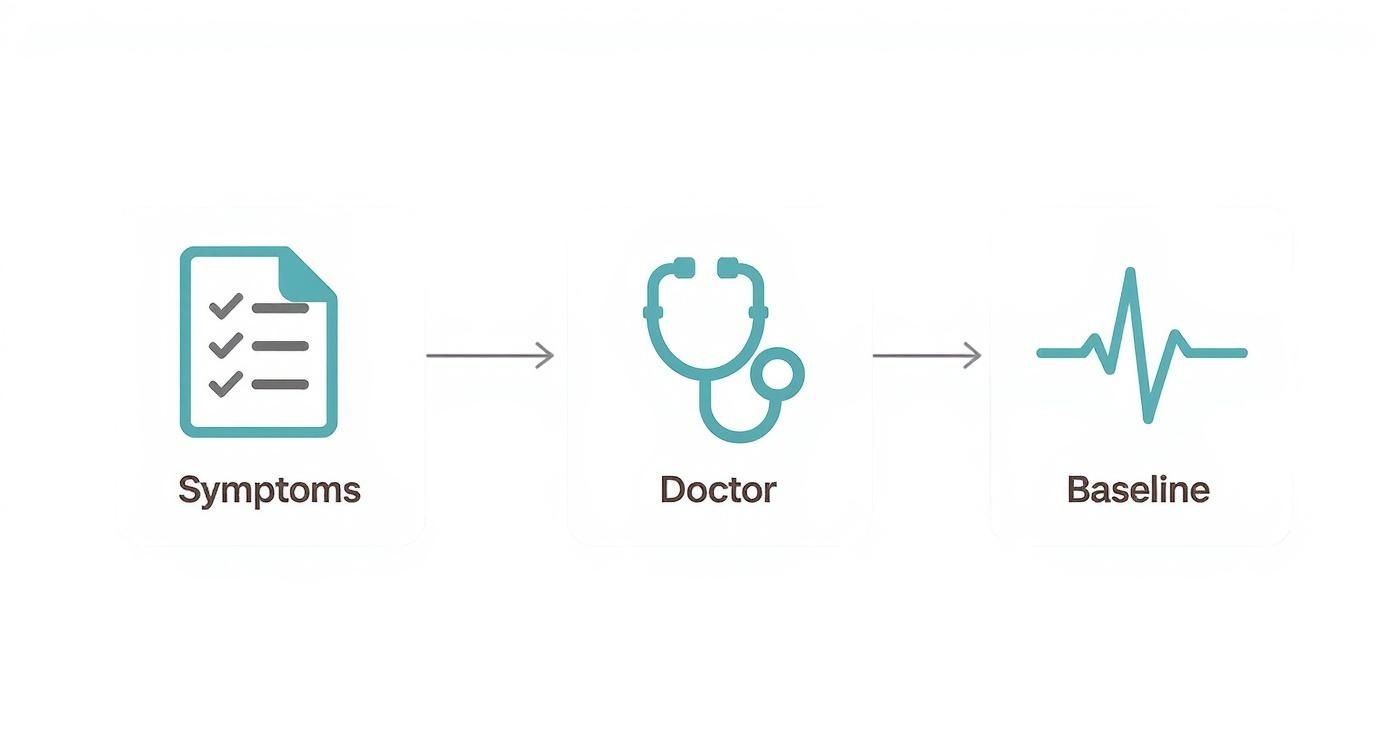
Establishing your baseline is a foundational part of the medical process that enables all other energy management strategies.
Put the "Stop, Rest, Pace" Technique into Action
Once you know your approximate limits, you can implement the "stop, rest, pace" method. This technique feels counterintuitive but is essential for breaking the boom-and-bust cycle. You will break down tasks into small chunks and schedule mandatory rest periods in between.
Here’s how to apply this to cooking a simple meal:
- Pace: Get all ingredients and utensils out on the counter.
- Rest: Sit down for 10-15 minutes.
- Pace: Chop vegetables while seated at a table.
- Rest: Take another 15-minute break.
- Pace: Stand at the stove for no more than 5 minutes at a time to stir.
- Rest: Sit down again while the food simmers.
This methodical approach conserves energy and prevents one "good" day from leading to several bed-bound ones. At its core, this is about listening to your body to avoid overexertion while reaping the mental health benefits of exercise.
A Practical Pacing Plan Example
This sample week demonstrates a gentle starting plan. The goal is not productivity but establishing a stable baseline without causing a crash.
| Day | Morning Activity (Limit 15 mins) | Scheduled Rest (30 mins) | Afternoon Activity (Limit 10 mins) | Scheduled Rest (30 mins) | Evening Activity (Limit 5 mins) |
|---|---|---|---|---|---|
| Mon | Unload dishwasher (sitting) | Lie down, no screens | Read two pages of a book | Lie down, listen to music | Fold one item of laundry |
| Tues | Write 1 email | Lie down, no screens | Gentle stretches on floor | Lie down, listen to music | Watch 5 mins of TV |
| Wed | Make a simple breakfast | Lie down, no screens | Listen to a podcast chapter | Lie down, listen to music | Tidy one surface |
| Thurs | Sort post | Lie down, no screens | Read two pages of a book | Lie down, listen to music | Fold one item of laundry |
| Fri | Water one plant | Lie down, no screens | Gentle stretches on floor | Lie down, listen to music | Watch 5 mins of TV |
| Sat | Make a simple breakfast | Lie down, no screens | Listen to a podcast chapter | Lie down, listen to music | Tidy one surface |
| Sun | Total Rest Day | Scheduled Rest | Total Rest Day | Scheduled Rest | Total Rest Day |
Note the short activity blocks and non-negotiable rest periods. This is the foundation from which you can slowly and carefully build.
Rest More Than Just Your Body
A key realisation for many with ME/CFS is that rest is not just physical. Your brain and senses also require downtime.
- Physical Rest: Lie down in a quiet, comfortable room with minimal movement.
- Cognitive Rest: Give your brain a break from demanding tasks like reading, complex conversations, or paying bills. This may mean sitting in silence rather than watching TV.
- Sensory Rest: Reduce sensory input. Dim the lights, use earplugs or noise-cancelling headphones, and avoid busy environments or strong smells.
Integrate these different types of rest into your day. For example, after a 20-minute phone call (a cognitive and sensory activity), schedule 30 minutes of sensory rest by lying in a dark, quiet room. It is all part of the same energy budget.
Optimise Nutrition and Sleep for Better Health
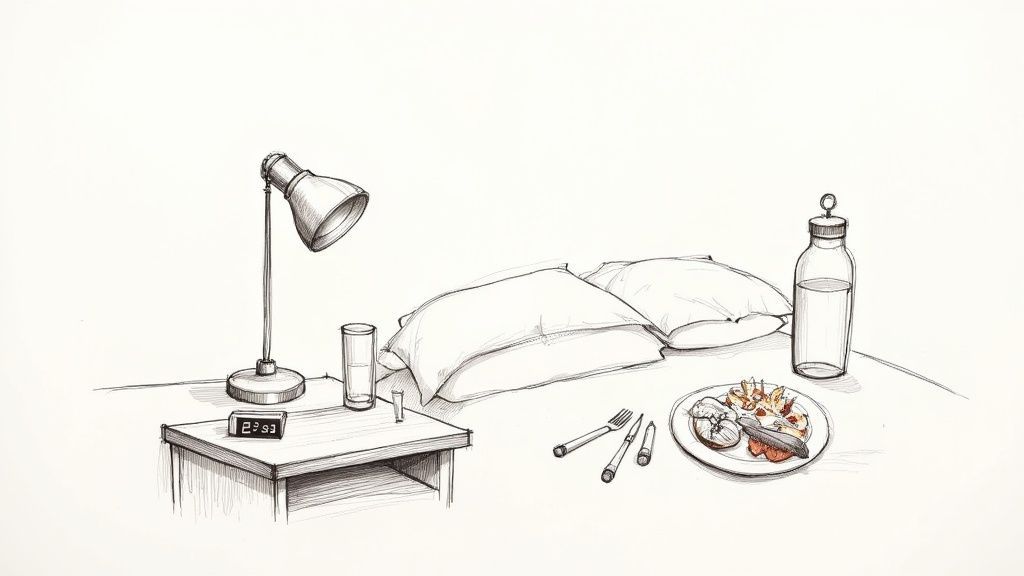
Managing ME/CFS requires a constant balance between rest and activity. Two critical pillars supporting this balance are nutrition and sleep. While neither can cure the condition, optimising them can significantly improve your daily symptoms and stability. Your goal is to provide your body with the best possible resources to function under challenging circumstances.
The deep, unrefreshing sleep typical of ME/CFS is difficult to resolve. However, you can create an environment that promotes higher-quality rest. Similarly, while no single diet is a cure, smart nutritional choices can help stabilise your energy and reduce inflammation.
Cultivate Better Sleep Hygiene
To improve your sleep, build a consistent, powerful routine that signals to your body that it's time to rest. This is called sleep hygiene, and it's non-negotiable for managing ME/CFS. Your bedroom must become a sanctuary dedicated solely to rest.
First, establish a strict sleep-wake schedule, even on weekends. Consistency helps regulate your body's internal clock (circadian rhythm), which is often disrupted in ME/CFS. Go to bed and wake up at approximately the same time every day, regardless of how you slept.
Take these practical steps to optimise your sleep environment:
- Master the Darkness: Make your bedroom as dark as possible using blackout curtains. Cover or remove all electronic lights. Eliminate blue light from screens (phones, tablets, TVs) for at least one hour before bed, as it suppresses the sleep hormone melatonin.
- Set the Right Temperature: A cool room facilitates better sleep. Aim for a temperature between 16-18°C to help lower your body’s core temperature, a natural part of falling asleep.
- Create a Wind-Down Ritual: Design a calming sequence of activities to perform every night. This could include listening to quiet music, doing gentle stretches, meditating, or reading a physical book. This ritual will train your brain to associate these actions with sleep.
For more in-depth guidance, you can find excellent advice on how to improve sleep quality naturally.
Fuel Your Body for Stable Energy
When you're exhausted, cooking can feel like an impossible task. The goal of an ME/CFS-friendly diet is to get maximum nutrition for minimal energy expenditure. It's about finding a stable fuel source, not making drastic changes.
A highly effective strategy is to eat small, frequent meals throughout the day. This helps maintain steady blood sugar levels, preventing the energy spikes and crashes that follow large meals. Provide your body with a slow, steady trickle of fuel.
Staying hydrated is also crucial. Dehydration drains energy and worsens brain fog. Keep a water bottle with you and sip throughout the day, rather than waiting until you feel thirsty.
While no single "ME/CFS diet" exists, many people find relief with an anti-inflammatory eating plan. This involves focusing on whole foods and reducing processed items that can increase inflammation and stress on your system.
Here are some low-energy nutritional action steps:
- Simplify Your Cooking: Choose meals with minimal preparation. Use one-pan traybakes, slow-cooker recipes, and pre-chopped vegetables.
- Focus on Whole Foods: Prioritise fruits, vegetables, lean proteins, and healthy fats that are packed with essential vitamins and minerals.
- Incorporate Anti-Inflammatory Foods: Include foods known to fight inflammation, such as fatty fish (like salmon), leafy greens, berries, and nuts. You can explore more foods that fight fatigue to get ideas for your meal plan.
Before making significant dietary changes or adding supplements, always consult your GP or a registered dietitian. They can help you create a safe, balanced plan tailored to your specific health needs.
Manage Cognitive Symptoms and Mental Wellbeing
Living with ME/CFS is a mental and emotional challenge as well as a physical one. The constant uncertainty and physical limitations can take a heavy toll. Additionally, cognitive symptoms—the notorious "brain fog"—can make simple mental tasks feel insurmountable.
Managing ME/CFS effectively requires a toolkit for both mind and body. You must tackle cognitive issues with practical strategies while supporting your mental health through self-compassion and gentle stress management. These two aspects are interconnected; high stress levels often intensify brain fog.
Tame Brain Fog With Practical Tools
Brain fog is a debilitating symptom that affects concentration, word recall, and short-term memory. Pushing through it is counterproductive. The key is to externalise your mental workload by creating an "external brain" to reduce the pressure on your internal one.
Treat your cognitive energy like your physical energy—it is a finite resource that requires careful pacing. Break down mentally taxing tasks into small, manageable steps with rest periods in between. For example, if you need to pay a bill, the first step might be simply locating the bill. Then rest before moving on to the next step.
Here are practical actions to manage your cognitive load:
- Use Memory Aids Consistently: Rely on technology and pen and paper. Set phone reminders for everything, use a digital calendar for appointments, and keep a running to-do list in a notebook.
- Create a "Home" for Everything: Designate a specific spot for essential items like keys, your wallet, and your phone to reduce the mental energy wasted searching for them.
- Communicate Your Needs Clearly: Inform people when you are struggling to follow a conversation. It is okay to say, "My brain is slow today; could you repeat that?"
For more in-depth strategies, our guide offers additional advice on how to clear brain fog with targeted tips.
Nurture Your Mental and Emotional Health
The emotional impact of ME/CFS is as significant as the physical one. It is natural to feel grief, anger, and frustration. Acknowledging these feelings without judgment is the first step toward building mental resilience. Self-compassion is a crucial survival tool, not an indulgence.
Your inner critic can become very loud when living with a chronic illness. Learn to speak to yourself with the same kindness you would offer a friend in the same situation.
Managing stress is vital, as the stress response itself is draining. Gentle, low-impact techniques can help calm your nervous system without depleting your energy reserves. Simple mindfulness and breathing exercises are an excellent starting point and can be done even while lying in bed.
A Simple Breathing Exercise to Try Now
- Lie down comfortably and place one hand on your belly.
- Breathe in slowly through your nose for a count of four, feeling your belly rise.
- Hold your breath for a count of two.
- Breathe out slowly through your mouth for a count of six, feeling your belly fall.
- Repeat for just one to two minutes to start.
This type of diaphragmatic breathing activates the vagus nerve, helping to shift your body from a "fight-or-flight" state to a "rest-and-digest" mode. It is a small but powerful action to reduce the physiological stress that exacerbates your symptoms.
Build Your Long-Term Support System
Living well with ME/CFS requires building a solid, long-term strategy for both good and bad days. This involves assembling the right team, communicating your needs clearly, and learning to gently and safely increase your baseline over time.
Approach this as a marathon, not a sprint. The skills you develop now will help you create a life that respects your health while remaining full and meaningful. You are in control of your wellbeing.
Assemble Your Healthcare Team
While your GP is your first point of contact, managing a complex condition like ME/CFS often requires a team. You are the manager of this team, so it's important to find professionals who understand the condition's nuances.
Consider adding these specialists to your team:
- An Occupational Therapist: They are experts in energy management and can provide practical strategies for adapting daily tasks—from cooking to working—to stay within your energy limits.
- A Dietitian with ME/CFS Knowledge: A specialist dietitian can help identify food sensitivities and create a low-effort, anti-inflammatory eating plan that supports stable energy.
- A Physiotherapist Specialising in ME/CFS: It is crucial that they understand post-exertional malaise (PEM). Their role is not to push exercise but to help you manage pain and maintain muscle tone safely, without causing a crash.
Finding the right professionals may take time. Persist until you find specialists who listen, believe you, and are prepared to work collaboratively on a plan that you lead.
Communicate Your Needs Effectively
Living with an invisible illness can be isolating. A key part of building your support system is learning to communicate your needs to family, friends, and employers. They cannot help if they do not understand.
Use simple, clear language. Instead of saying "I'm tired," use an analogy: "Imagine your phone battery only charges to 30%, and taking a shower uses 10% of that." This helps people grasp the concept of a limited energy budget.
Be specific with your requests for help. "I need help" is too vague. Instead, say, "It would be a huge help if you could pick up milk for me when you go to the store." This is a clear, actionable request. Effective communication builds resilience and strengthens your support network. You can explore more on how to build mental resilience against these challenges.
Connect With Patient Organisations
You are not alone on this journey. ME/CFS is more common than many realise. A recent analysis of UK hospital data suggested a prevalence rate of around 0.6%, which could mean as many as 404,000 people are affected nationwide. You can learn more about these ME/CFS prevalence findings.
Connecting with others who understand can be a game-changer. Patient groups and online forums provide community and valuable resources.
- Share Knowledge: These groups are excellent sources for practical tips and recommendations for ME/CFS-aware doctors in your area.
- Get Emotional Support: Sometimes, the greatest relief comes from talking to someone who understands the daily struggle without needing an explanation.
- Engage in Advocacy: These organisations work to raise awareness and improve care. Getting involved, even in a small capacity, can be empowering.
Building this support system—from your medical team to understanding friends and fellow patients—is the foundation of any successful long-term plan for managing ME/CFS.
Your Questions About ME/CFS Answered
When you're first diagnosed with ME/CFS, it's natural to have many questions. Navigating the complexities of symptoms, treatments, and lifestyle changes can be overwhelming. Let's address some of the most common queries.
Understanding the reality of recovery, the role of diet, and which therapies are helpful versus harmful is essential. This knowledge empowers you to take control and make informed decisions for your health.
Can You Fully Recover From ME/CFS?
While there is currently no "cure" for ME/CFS, many people can significantly improve their symptoms and achieve a good quality of life. For most, recovery is not about becoming completely illness-free but about learning to live well within the body's new limits.
The primary goal is to use strategies like pacing to prevent post-exertional malaise (PEM) crashes. Recovery is rarely linear; expect ups and downs. Success is measured by an increased ability to function without triggering setbacks, not by a complete absence of symptoms. An early diagnosis and a proactive, patient-led approach offer the best long-term outlook.
Differentiating Pacing and Graded Exercise
Understanding the difference between Pacing and Graded Exercise Therapy (GET) is critical for your wellbeing, as they are opposing approaches to activity.
- Pacing is an energy management strategy that you control. The goal is to stay within your personal energy "envelope" to avoid PEM. It involves listening to your body and resting before exhaustion sets in.
- Graded Exercise Therapy (GET) is a rigid programme of incrementally increased physical activity, often prescribed by a therapist regardless of your symptoms.
The official NICE guidelines in the UK no longer recommend GET for ME/CFS. A significant body of evidence shows that this approach can cause substantial harm and worsen symptoms for many people. The current focus is correctly placed on symptom-contingent strategies like pacing.
What About Diets and Supplements?
No single diet or supplement has been proven to cure ME/CFS. However, smart nutritional choices can help manage specific symptoms and support your overall health.
For instance, an anti-inflammatory diet rich in whole foods may help reduce pain levels for some. Others find that eliminating stimulants like caffeine is key to achieving more restorative sleep.
Supplements such as Coenzyme Q10 or magnesium are sometimes reported as helpful, but the evidence is largely anecdotal. It is essential to consult your GP or a registered dietitian before making major dietary changes or starting new supplements to ensure they are safe and will not interfere with any medications you are taking.
At Oji Shilajit, we believe in supporting your body's natural vitality. Our enhanced Shilajit gummies are formulated with over 85 trace minerals and adaptogens to help support energy, mental clarity, and stress management. Discover a natural way to help restore essential nutrients at https://myoji.co.uk.