
To get a handle on that muscle burn during intense exercise, you need a smart, actionable approach. The goal is to get more oxygen to your muscles, manage your intensity, and help your body clear metabolic byproducts more efficiently. This guide will show you how to implement active recovery, better breathing habits, and clever training to raise your lactate threshold.
Following these steps will turn what feels like a limitation into a real performance advantage.
What Lactic Acid Buildup Really Means for You
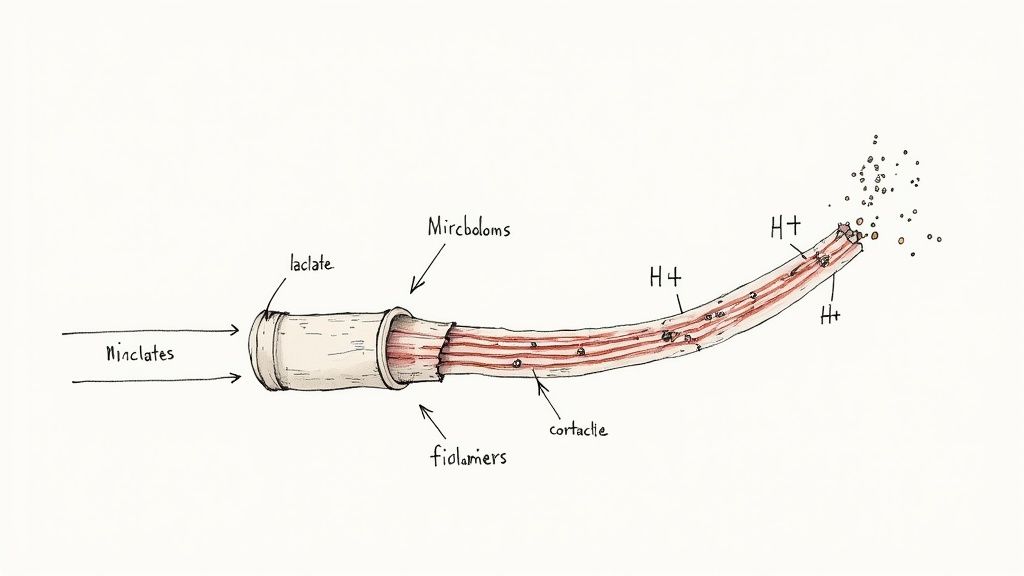
You know that searing sensation in your legs during the last few reps of a heavy squat, or that fire in your lungs on the final sprint? For decades, "lactic acid" got all the blame, written off as a painful waste product that brought your muscles to a grinding halt.
But the real story is much more interesting—and far more useful for anyone looking to improve their performance.
First off, the term "lactic acid" is a bit of a misnomer in our bodies. What you're actually producing is a substance called lactate. The signature burn you feel comes from an accumulation of hydrogen ions, which are released at the same time and make your muscles more acidic.
From Waste Product to Super Fuel
So if lactate isn't the villain, what is it? Think of it as a high-octane fuel source.
When you're training hard, you're demanding energy faster than your oxygen-based (aerobic) system can keep up. To cover the shortfall, your body kicks into its anaerobic (without oxygen) gear. This rapid energy production creates lactate, but it doesn't just sit there. Your body cleverly shuttles it off to your heart, liver, and even other muscle fibres to be converted back into usable energy. It's a brilliant internal recycling system designed to keep you moving.
- The Misconception: Lactic acid causes that intense muscle burn.
- The Reality: It’s actually the hydrogen ions produced alongside lactate that create the acidic, burning sensation.
- The Key Function: Lactate is a fast-acting fuel your muscles and heart use to power through intense effort.
Understanding this completely shifts the goalposts. You don't want to eliminate lactate; you want to get better at clearing those pesky hydrogen ions and reusing lactate for fuel. To really get your head around the science, you can dig deeper into what is lactate in blood and its vital role.
Viewing lactate as a resource rather than a waste product is the secret. It allows you to train your body to use it more efficiently, which is how you smash through performance plateaus.
Improving this metabolic efficiency is what separates good athletes from great ones. Through strategic training, you can dramatically improve your body's ability to handle intense work. A huge piece of this puzzle is getting better at using oxygen, which you can learn more about in our guide on how to increase aerobic capacity. This is the key adaptation that lets you push harder for longer before that all-too-familiar burn sets in.
How to Handle Muscle Burn During and After Your Workout
When that familiar burn starts creeping deep into your muscles, your first instinct is to stop. While sometimes a break is necessary, the most effective action to manage that feeling and clear lactic acid is often to keep moving—just at a much slower pace.
This technique is called active recovery, and it’s a total game-changer for removing metabolic byproducts far faster than simply sitting down. By continuing to move, you maintain blood flow, which acts like a transport system to shuttle lactate away from your muscles so it can be used as fuel elsewhere.
Implement Active Recovery
Instead of collapsing onto the nearest bench after a tough set, implement a gentle cooldown. This single shift can make a massive difference in how you feel and perform later.
An active recovery session is simple. The goal is to keep your heart rate slightly elevated, which helps your body's natural clean-up processes work more efficiently. UK sports studies have found that light exercise after an intense workout can boost lactic acid clearance by up to 30% compared to passive rest. This is due to increased blood circulation, which helps metabolise lactate. For more details, you can explore the full research on lactic acid management strategies.
Here are actionable examples of what active recovery looks like:
- After running intervals: Do not stop. Slow down to a light jog or a brisk walk for 10-15 minutes.
- After a heavy lifting session: Get on a stationary bike for 10 minutes. Use low resistance and maintain an easy pace.
- During a HIIT class: In your rest periods, walk around or perform gentle leg swings instead of standing still.
The key is to keep the intensity low—around 40-50% of your maximum heart rate. You should be able to hold a conversation easily.
The biggest mistake people make is thinking that total rest is the best recovery. Gentle movement is your most powerful tool for flushing out all the stuff that causes fatigue and soreness right after a hard session.
Master Your Breathing While You Work
It’s not just what you do after an interval; how you breathe during it is equally important. When you push yourself hard, breathing often becomes shallow and chaotic, which deprives your muscles of the oxygen they need.
Learning to control your breath can directly help you manage that burn and continue for longer. This is about making every breath count.
Try This Controlled Breathing Technique
The next time you feel the burn setting in during a workout, do this:
- Breathe in deeply through your nose for a count of three. Focus on filling your diaphragm—your belly should expand.
- Breathe out steadily through your mouth for a count of four, with your lips gently pursed.
- Sync your breathing with your movement. For instance, breathe in for every three steps you take on a run.
This simple technique delivers more oxygen to your working muscles and calms your nervous system, helping you stay in control when the workout gets tough. By combining this breathing method with active recovery, you gain two powerful, real-time tools to reduce lactic acid and push past your old limits.
Fuel Your Body to Fight Fatigue
Your food and drink choices have a massive impact on your performance and recovery. A smart nutritional plan directly influences your ability to buffer muscle burn, produce energy efficiently, and clear out fatigue-causing byproducts.
When you're figuring out how to reduce lactic acid, your diet is one of the most powerful tools available. Proper nutrition provides your muscles with the essential materials for performance and recovery.
Power Up with Magnesium-Rich Foods
Magnesium is an unsung hero in energy metabolism. This essential mineral plays a key role in hundreds of bodily reactions, including converting glucose into fuel. Low magnesium levels make your energy production less efficient, causing you to hit a wall and feel lactate burn sooner.
To give your body what it needs, integrate more magnesium-dense foods into your diet.
- Leafy Greens: Add spinach and Swiss chard to your meals; they are loaded with magnesium.
- Nuts and Seeds: Snack on a handful of almonds, pumpkin seeds, or cashews for a powerful boost.
- Legumes: Eat black beans and lentils for a great mix of magnesium and quality plant-based protein.
A simple change, like chucking a handful of spinach into your morning smoothie or swapping crisps for almonds, can make a real difference to your muscle function and endurance over time.
This handy infographic gives you a quick visual recap of the tactics you can use in the heat of the moment to manage that muscle burn.
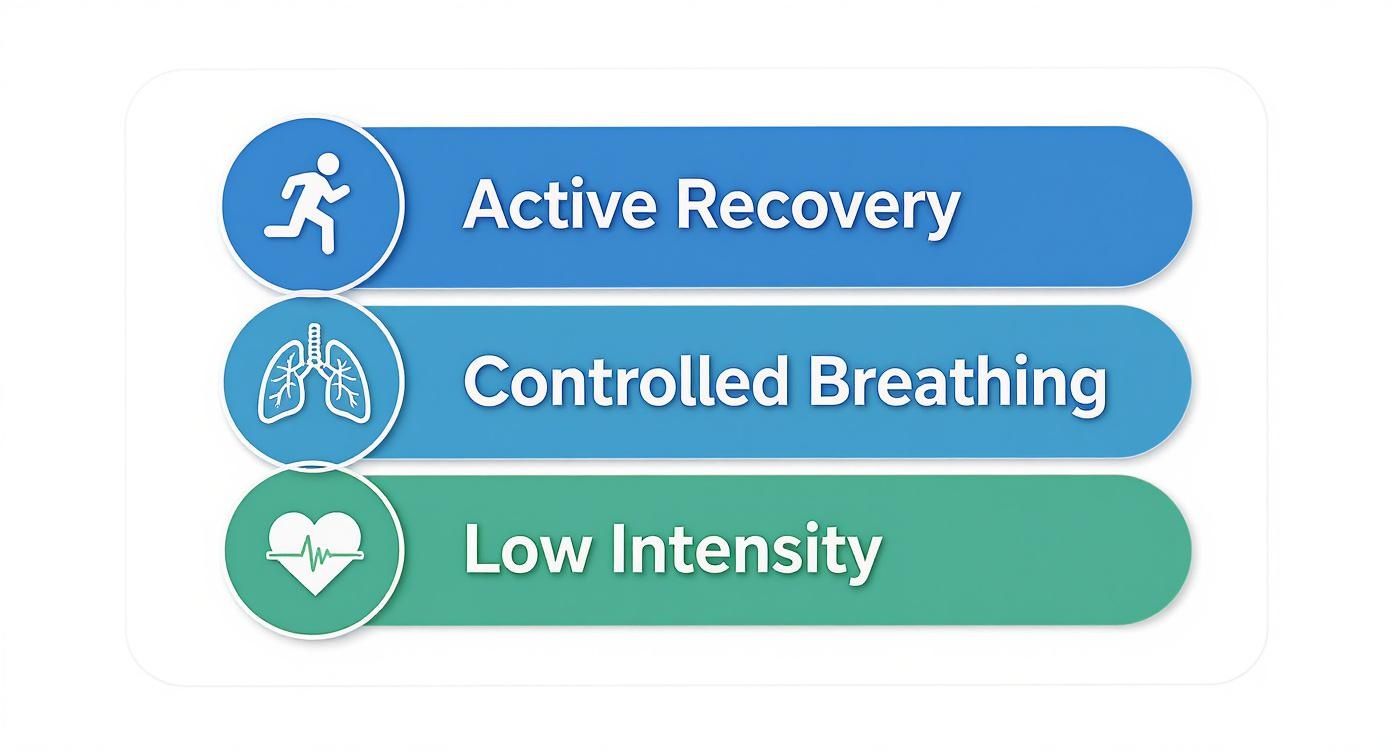
When you combine these immediate actions with smart, long-term nutritional strategies, you build a seriously effective system for keeping fatigue at bay.
Strategic Supplementation for Peak Performance
While a food-first approach is the best foundation, certain supplements can provide a targeted edge in managing exercise-induced acidity, especially when you're pushing your limits.
Before we dive in, this table compares some common nutritional aids.
Nutritional Aids for Lactic Acid Management
| Nutritional Aid | Mechanism of Action | Practical Application & UK Sourcing |
|---|---|---|
| Magnesium-Rich Foods | Essential for efficient energy production (ATP synthesis), reducing reliance on anaerobic glycolysis which produces lactate. | Add spinach to meals, snack on almonds or pumpkin seeds. Easily found in any UK supermarket like Tesco, Sainsbury's, or local grocers. |
| Sodium Bicarbonate | Acts as an extracellular buffer, neutralising excess hydrogen ions in the blood, which raises the pH and helps draw acid out of muscle cells. | Often called baking soda. Mix with water 60-90 mins pre-workout. Start with a low dose. Available from any major UK supermarket's baking aisle. |
| Beta-Alanine | Increases muscle carnosine levels. Carnosine is an intracellular buffer that soaks up hydrogen ions directly inside the muscle, delaying fatigue. | Requires a 'loading phase' of several weeks. Find it at specialist UK supplement retailers like Holland & Barrett, Myprotein, or Bulk. |
This table shows how different aids work on different pathways—some inside the muscle, others in the bloodstream. Now, let's look at a couple in more detail.
Sodium Bicarbonate: Commonly known as baking soda, this kitchen staple is a powerful buffering agent that helps neutralise acid (hydrogen ions) in your blood during hard sessions. A typical dose is 200-300 mg per kilogram of body weight, taken 60-90 minutes before a tough workout. Be cautious: it can cause an upset stomach, so always start with a smaller dose to test your tolerance.
Beta-Alanine: This amino acid boosts your muscles' stores of carnosine, another vital buffer against acidic burn. Unlike baking soda, beta-alanine requires a loading phase. A common protocol is taking 4-6 grams per day in smaller doses for a few weeks to fully saturate your muscles.
UK athletes are increasingly using nutrition for a competitive edge. A UK-based trial found that participants supplementing with sodium bicarbonate saw a 12-15% improvement in lactate clearance rates compared to a placebo. This demonstrates how targeted nutritional tweaks can have a direct, measurable impact. To dig deeper, you can review the market research on lactic acid management.
Hydration Is Non-Negotiable
Never underestimate the power of water. Proper hydration is fundamental to nearly every bodily function, including flushing out metabolic waste products like lactate.
When you're dehydrated, your blood volume drops, making it harder for your heart to pump blood, transport lactate away from your muscles, and deliver the oxygen they need.
The NHS suggests active adults in the UK aim for around 2.5 litres of water daily, but your needs will increase depending on workout intensity and duration. Sip water steadily throughout the day rather than chugging a pint right before you start.
Use Advanced Recovery Techniques to Bounce Back Faster
When you consistently push your limits, a standard cool-down may not be enough. To effectively manage muscle soreness and clear lactic acid, you may need to incorporate more advanced methods. These techniques go beyond simple stretching; they actively help your body flush metabolic waste and initiate muscle repair.
One of the most powerful—and often dreaded—strategies is cold water immersion (CWI), also known as an ice bath. While the initial shock is intense, the physiological benefits are significant.
Plunging into cold water causes vasoconstriction (constriction of blood vessels), which helps squeeze metabolic byproducts—including the hydrogen ions that cause muscle burn—out of your tissues and into your bloodstream. When you get out and warm up, your blood vessels dilate, flooding your muscles with fresh, oxygen-rich blood that aids in repair. For a deeper dive into this and other recovery strategies, check out our comprehensive guide on muscle recovery after workout.
Getting Started with Cold Water Immersion
You don't need a high-tech cryotherapy chamber to benefit from CWI. You can create a simple, consistent protocol in your own bathtub.
- Temperature: Aim for water between 10-15°C. It should be uncomfortably cold but not painfully so.
- Duration: Stay in for 10 to 15 minutes. Longer durations offer diminishing returns and can put excessive stress on your system.
- Timing: The most effective time is within an hour of finishing a tough workout to maximize its impact on reducing inflammation and clearing lactate.
UK sports physiologists have found that a 10-minute dip in 10-15°C water can lower blood lactate 20-25% faster than passive rest. The technique is so effective that even the British military uses cold water therapy for personnel recovery.
The real secret to CWI isn’t about being a hero and enduring the coldest, longest bath. It's all about consistency. A regular 10-minute ice bath after your hard sessions will do far more for you than one extreme plunge every few months.
Beyond the Ice Bath: Mechanical Recovery Tools
If an ice bath isn't for you, other mechanical tools can boost circulation and speed up recovery.
Foam rollers and massage guns are excellent for self-myofascial release. This technique helps break up tight knots and adhesions in your muscles, immediately improving blood flow to the area.
Spend a few minutes with a foam roller on large muscle groups like your quads, hamstrings, and back after a session to release tension and help shuttle waste products out of the tissue. It's another brilliant—and much warmer—way to tackle lactic acid build-up.
Train Smarter to Raise Your Lactate Threshold
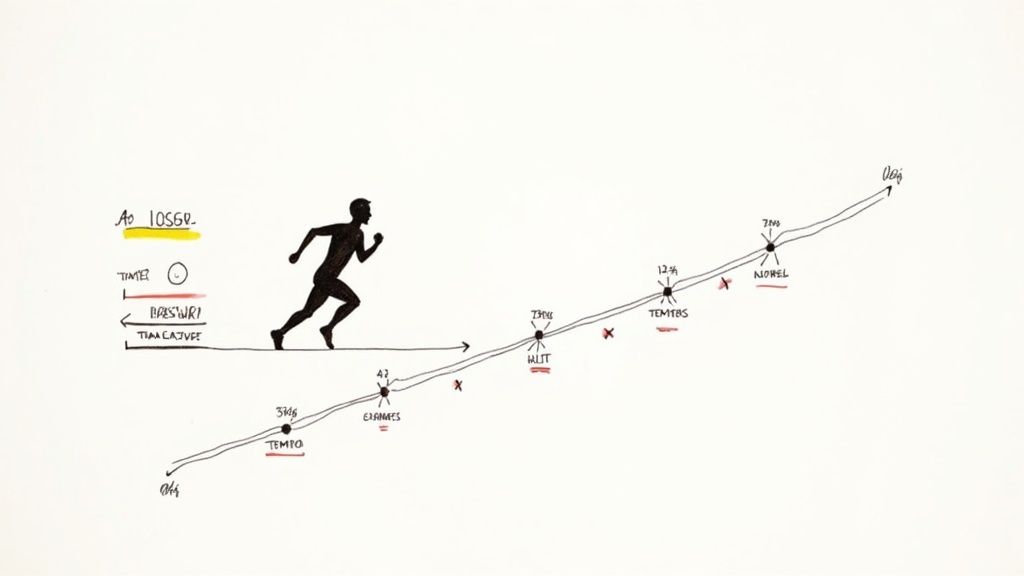
While managing muscle burn in the moment is useful, the real game-changer is training your body to produce less lactate at higher intensities. This involves raising your lactate threshold—the point where lactate accumulates in your blood faster than your body can clear it.
Pushing this threshold higher allows you to maintain a faster pace for longer before fatigue sets in. Think of it as your sustainable red line. The goal of smart training is to push that line further. You achieve this by teaching your body to use oxygen more efficiently and clear lactate more effectively.
Two proven methods are particularly effective for this.
Embrace Tempo Training
Tempo runs, or threshold training, are essential for any athlete looking to raise their lactate threshold. The concept is simple: run at a "comfortably hard" pace for a sustained period. This is the sweet spot where you might be able to utter a few words but cannot hold a full conversation.
This intensity pushes your body to the edge of its lactate-clearing ability, forcing it to adapt and become more efficient over time.
A classic tempo session might look like this:
- Warm-up: 10-15 minutes of easy jogging.
- Tempo: 20 minutes at a pace you feel you could sustain for about an hour.
- Cool-down: 10-15 minutes of easy jogging.
This consistent, focused effort trains your muscle fibres to handle and process lactate more effectively, making you a more resilient athlete.
Integrate High-Intensity Intervals
While tempo work builds your aerobic foundation, High-Intensity Interval Training (HIIT) challenges your threshold from the top down. HIIT involves short, intense bursts of near-maximal effort followed by brief recovery periods.
These intense efforts deliberately flood your system with lactate, compelling your body to become highly efficient at clearing it out.
The real magic of HIIT is in the recovery. It’s during those short rest periods that your body’s lactate-clearing mechanisms are working overtime, and that's the stimulus that drives adaptation.
By blending steady tempo work with sharp intervals, you’re hitting your lactate threshold from both angles. To really take your performance to the next level, it's worth looking into structured plans like those in a complete guide to improving running speed and endurance.
As your body adapts, you’ll find you can push harder for longer before that familiar burn even thinks about showing up. And remember, supporting your training with the right nutrition is key; exploring certain supplements for endurance can also give your body the backup it needs to perform at its peak.
To give you a clearer picture of how this looks in practice, here is a sample week that balances different types of training to systematically improve how your body manages lactate.
Sample Training Week for Improving Lactate Threshold
| Day | Workout Focus | Example Activity (Runner) | Example Activity (Cyclist) |
|---|---|---|---|
| Monday | Active Recovery | 30-min easy jog or walk | 45-min easy spin, low resistance |
| Tuesday | Tempo Training | 15-min warm-up, 25-min tempo run, 15-min cool-down | 15-min warm-up, 2 x 15-min tempo intervals, 15-min cool-down |
| Wednesday | Rest or Cross-Training | Complete rest or light activity like yoga/swimming | Complete rest or light activity like swimming/stretching |
| Thursday | High-Intensity Intervals (HIIT) | 15-min warm-up, 8 x 400m repeats w/ 400m jog recovery, 15-min cool-down | 15-min warm-up, 10 x 1-min max effort w/ 2-min easy spin recovery, 15-min cool-down |
| Friday | Active Recovery | 30-min easy jog or walk | 45-min easy spin, low resistance |
| Saturday | Long Endurance | 60-90 min run at a steady, conversational pace | 2-3 hour ride at a steady, Zone 2 pace |
| Sunday | Rest | Complete rest | Complete rest |
This schedule is a template. The key principle is combining specific, targeted stress with adequate recovery to force adaptation. By consistently applying these methods, you will see your "red line" move, allowing you to perform better, faster, and for longer.
Got Questions About That Muscle Burn? Let's Clear Things Up
Even with the right strategies, it's easy to get caught up in gym myths. That familiar muscle burn has been a topic of locker-room debates for years, and much of the old advice doesn't hold up.
Let's address some of the most common questions directly so you can be confident in your approach.
Is Lactic Acid What Makes My Muscles Sore the Next Day?
This is the biggest misconception, and the answer is a clear no.
The deep ache you feel 24 to 48 hours after a tough workout is Delayed Onset Muscle Soreness (DOMS). DOMS is caused by microscopic tears in your muscle fibres and the inflammation associated with the body’s natural repair process.
The lactate and hydrogen ions that cause the burn during your workout are cleared from your system relatively quickly, usually within an hour or two. The two sensations are entirely separate.
Think of it this way: the burn you feel during a workout is the immediate feedback from intense effort. The soreness you feel days later is the sign that your muscles are rebuilding stronger. They're two completely different processes.
Will Stretching After a Workout Get Rid of Lactic Acid?
While post-workout stretching is excellent for flexibility and mobility, it is not the primary tool for flushing out lactic acid. The real hero here is blood flow—it’s what transports lactate away from your muscles to be converted back into energy.
Stretching is a mostly static activity. To clear lactate, you need to keep moving.
- Static Stretching: Holding a stretch for 30-60 seconds. This is great for lengthening muscles but does little for circulation.
- Active Recovery: Gentle movement like a slow walk, a light spin on a bike, or easy laps in a pool. This is what keeps blood pumping and actively clears metabolic by-products.
So, continue to include stretching in your cool-down for its benefits. Just be sure to pair it with some active recovery to properly manage lactate.
Do Some People Just Naturally Produce More Lactic Acid?
Yes, individual physiology plays a significant role. Factors like your muscle fibre makeup (whether you're built for explosive power or endurance), your current fitness level, and genetics all influence how quickly you produce lactate and how efficiently your body clears it.
For example, an athlete with a higher percentage of fast-twitch muscle fibres—built for sprinting and heavy lifting—will rely more on anaerobic energy and produce lactate faster than a marathon runner whose muscles are dominated by slow-twitch fibres.
However, this is not set in stone. Your lactate threshold is highly trainable. By consistently incorporating tempo runs and interval training into your routine, you can teach your body to become much better at managing lactate, regardless of your starting point.
At Oji Shilajit, we're all about supporting your body’s innate potential. While smart training and nutrition are the foundations, our enhanced Shilajit gummies are formulated to help with natural energy, stamina, and overall vitality. They can help you recover and perform at your best. Find a natural way to restore essential nutrients at https://myoji.co.uk.