

To get a high-protein vegetarian snack, what should you make? Start with powerhouse foods like roasted chickpeas, a pot of Greek yoghurt sprinkled with seeds, or a simple bowl of edamame. Use them to top up your daily protein, keeping you full and energised without any meat in sight.
Why Protein Veg Snacks Are a Game Changer
Ever hit that 3 p.m. wall? That moment when your energy just evaporates and your focus goes with it. Too often, the go-to fix is a sugary biscuit or a bag of crisps, which gives you a quick buzz followed by an even quicker crash. This is exactly where you should use protein-rich veggie snacks to change the game.
Protein isn’t just for bodybuilders; it’s the key to maintaining steady, reliable energy all day long.
Unlike the simple carbs in a biscuit that your body burns through in minutes, protein digests slowly. This keeps your blood sugar stable, heading off the sharp spikes and nosedives that leave you feeling tired and craving more junk. Make a simple swap from a carb-heavy snack to one packed with protein to give your body a far more dependable power source. It's a fundamental step in beating afternoon fatigue, and you can learn more about this connection in our guide on the top foods that fight fatigue.
The Rise of Plant-Powered Snacking
There's a stubborn myth that it's hard to get enough protein on a vegetarian diet. Honestly, it couldn’t be further from the truth. The plant kingdom is overflowing with fantastic, protein-rich options that are perfect for snacking. Prepare crunchy roasted chickpeas, creamy hummus, and vibrant edamame—these snacks are delicious, convenient, and incredibly effective.
And it seems like the rest of the UK is catching on.
People are more switched on than ever about health and wellness, and that’s fuelling a huge demand for snacks that actually support a healthy lifestyle. This trend is a major force behind the market’s growth, with plant-based proteins leading the charge as more of us look to cut down on meat.
The numbers back this up. The UK's healthy snacks market, which includes protein veg snacks, was valued at an impressive £2.36 billion and is expected to climb to £3.73 billion by 2033. This isn't just a fleeting trend; it’s a collective shift towards smarter, more mindful eating. This guide is here to give you the foundation you need to make these simple, powerful swaps a part of your everyday routine.
Calculating Your Personal Protein Target
So, how much protein do you actually need? It’s a question that trips a lot of people up, but it doesn't have to be a big mystery. Think of protein as the ultimate repair crew for your body—it rebuilds muscles after a workout, keeps you feeling satisfied between meals, and helps keep your metabolism ticking over.
Just like a builder needs the right amount of bricks for a project, your body needs a specific amount of protein. That amount isn't one-size-fits-all; it changes based on how you spend your days.
Finding Your Daily Protein Goal
The single biggest factor in figuring out your protein target is your lifestyle. Someone with a desk job simply won’t need the same amount of protein as a gym regular or a weekend marathon runner. A really simple and effective way to get a personalised number is to base it on your body weight.
First, find your weight in kilograms. If you only know your weight in pounds, just divide that number by 2.2. For instance, if you weigh 150 pounds, you’re right around 68 kilograms.
Before we get into the numbers, it's worth busting a few common myths about protein, especially when it comes to plant-based diets.
As you can see, the idea that you can't get enough quality protein from vegetarian sources is completely outdated. Once you’re clear on that and you have your weight in kilograms, you can pinpoint your ideal daily intake.
Daily Protein Targets Based on Activity Level
Use this simple table as a clear starting point for calculating your daily protein needs. Just find the activity level that best describes your week and use the corresponding multiplier.
| Activity Level | Description | Recommended Protein (g/kg of body weight) |
|---|---|---|
| Mostly Sedentary | You have a desk job or a low-activity lifestyle with little formal exercise. | 0.8g |
| Moderately Active | You get in some regular exercise 3-5 times a week at a moderate intensity. | 1.2g – 1.6g |
| Very Active/Athlete | You’re into heavy strength training, endurance sports, or train intensely most days. | 1.6g – 2.2g |
These guidelines help you move from a vague idea of "eating more protein" to having a concrete, actionable daily goal.
Protein Needs for Different Lifestyles
Let’s put those numbers into action. Finding the right target for you is key, whether you’re just looking to stay healthy, build a bit of muscle, or fuel some serious athletic goals.
-
For General Health (Sedentary Lifestyle)
If your days mostly involve sitting, set your goal at 0.8 grams of protein per kilogram of body weight. This is the baseline your body needs to handle all its essential repairs and stay in good shape. -
For Active Individuals (Regular Exercise)
If you’re hitting the gym, going for runs, or doing classes 3-5 times a week, your body needs more protein to help with recovery. Aim for a range between 1.2 and 1.6 grams per kilogram. -
For Athletes and Intense Training
For anyone pushing their body hard with heavy weights or long endurance sessions, protein becomes absolutely critical for performance and repair. Your target should be in the higher range of 1.6 to 2.2 grams per kilogram. We dive deeper into this in our nutrition plan for athletes.
To calculate your daily goal, take a moderately active person who weighs 68 kg as an example:
- Lower end: 68 kg x 1.2 g/kg = 82 grams of protein per day.
- Higher end: 68 kg x 1.6 g/kg = 109 grams of protein per day.
That provides a clear daily protein window of 82-109 grams. Once you know your range, you can start being strategic. Your high-protein veggie snacks are no longer just a random bite to eat—they become a powerful tool to help you hit your numbers and feel your best.
The Best High Protein Veg Snacks You Can Make or Buy
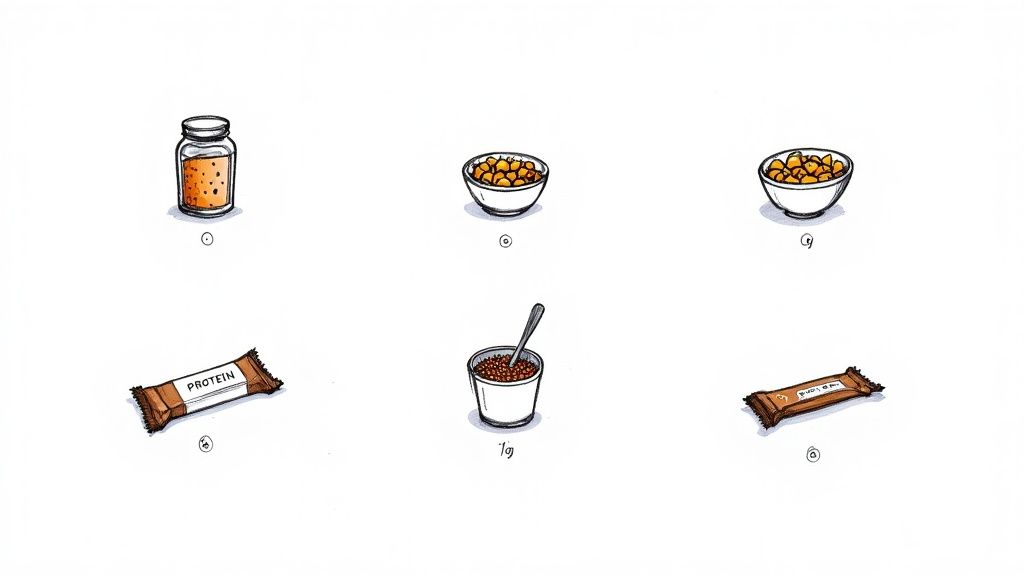
Knowing your protein target is one thing, but actually hitting it day in, day out? That’s a whole different ball game. The secret is to have a solid arsenal of go-to protein veg snacks ready for when hunger strikes.
Whether you enjoy kitchen prep or need something you can just grab and go, there are tons of delicious and convenient options. To make it easy, we've split our top picks into two simple categories: quick snacks you can make yourself, and the best ready-to-eat options from UK shops.
Quick DIY Snacks for Effortless Protein
Making your own snacks puts you in complete control. You know exactly what’s going into them—no hidden sugars or weird additives. These ideas are all about speed and simplicity, proving that healthy eating doesn't have to be a chore.
- Greek Yoghurt with Seeds (Approx. 20g protein): A small pot of plain Greek yoghurt is a protein powerhouse. For extra crunch, protein, and fibre, top it with a tablespoon of chia or pumpkin seeds.
- Roasted Chickpeas (Approx. 8g protein per ½ cup): Craving crisps? This is your answer. Drain a tin of chickpeas, toss them with a little olive oil and your favourite spices, and roast until golden and crispy.
- Edamame Beans (Approx. 11g protein per 100g): One of the easiest protein veg snacks around. Steam a bowl of edamame pods and add a sprinkle of sea salt for simple perfection. Buy them frozen and just pop them in the microwave for a minute.
To elevate your homemade snacks, learn how to effectively use rubs on vegetables. It’s an easy trick to turn a basic snack into something genuinely delicious.
More Homemade Snack Inspiration
A little prep goes a long way. These ideas take just a few extra minutes but pay off big time in the nutrition department.
- Cottage Cheese with Berries (Approx. 15g protein): This one is seriously underrated. Cottage cheese is packed with protein. Pair a small bowl with a handful of fresh berries for a perfect mix of protein, natural sweetness, and antioxidants.
- Hard-Boiled Eggs (Approx. 6g protein per egg): Boil half a dozen at the start of the week and you've got an instant, portable protein fix ready whenever you need it. Simple, effective, and surprisingly versatile.
- Tofu Fingers with Salsa (Approx. 10g protein): Press a block of firm tofu to get the water out, slice it into fingers, then bake or air-fry until golden. Serve with a quality salsa for a satisfying, plant-based protein hit.
Key Takeaway: A smart snacking strategy is all about preparation. Spend just 20 minutes on a Sunday boiling some eggs or roasting chickpeas. You’ll have healthy, protein-rich options ready for the week, making it so much easier to steer clear of junk food when you’re hungry.
Top Ready-to-Eat Options
Let’s be realistic—sometimes, you just don’t have the time or energy to make anything. Thankfully, the UK market for plant-based snacks is booming, so you've got more high-quality, convenient choices than ever before.
In fact, plant-based items now make up a huge 62.6% share of the protein snacks market in the UK. This sector is set to grow by 9.5% each year, with snacks made from cereals and grains leading the charge. It shows that more of us are realising the benefits of whole grains.
Here are some excellent pre-packaged choices to look out for:
- High-Quality Protein Bars (15-20g protein): Not all bars are the same. Look for one with at least 15g of protein, less than 10g of sugar, and a short ingredient list you can actually recognise.
- Lentil or Chickpea Crisps (5-7g protein per serving): A much healthier alternative to your standard potato crisps. They deliver a satisfying crunch along with a decent hit of protein and fibre, without the empty calories.
- Individual Nut Butter Sachets (7-8g protein): These are brilliant. Perfectly portioned and easy to stash in your bag, they're great with an apple or a few whole-grain crackers for a balanced snack on the move.
By keeping a mix of homemade and shop-bought snacks handy, you’ll always have a protein-packed option ready to go, no matter how busy your day gets.
How to Time Your Snacks for Peak Performance
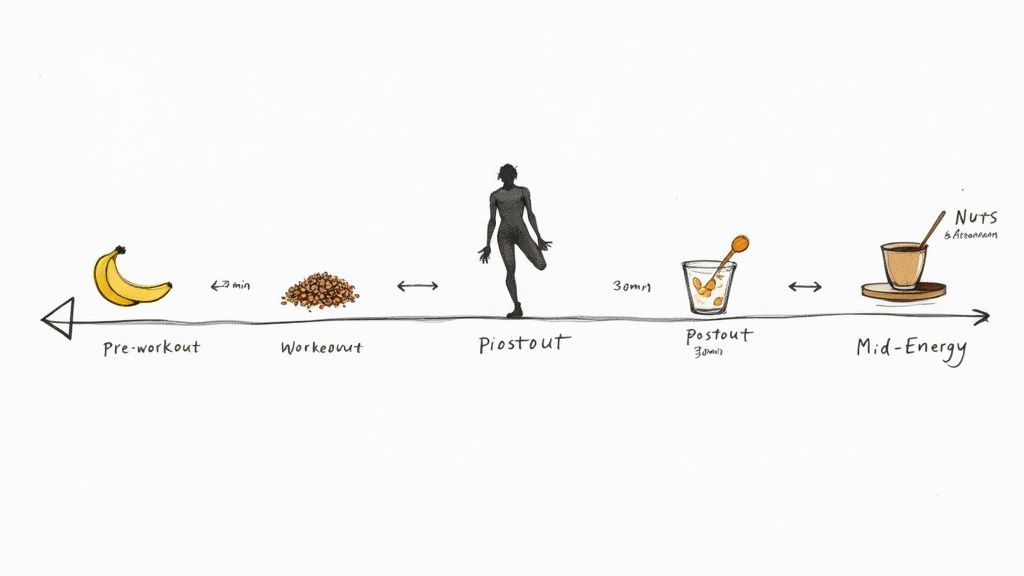
Choosing the right protein veg snacks is a fantastic start, but when you eat them can make all the difference. Get the timing right to transform snacking from a simple hunger fix into a powerful tool for boosting energy, speeding up recovery, and staying sharp all day long.
Think of it like fuelling a high-performance car. You wouldn't wait until the tank is bone-dry to refuel, nor would you fill it with the wrong type of petrol. Plan your snacks around your workouts and workday to give your body the precise fuel it needs, exactly when it needs it.
Fuelling Your Workout The Right Way
Nail your nutrition around exercise to get the results you want. What you eat before you train gets your body prepped for action, while your post-workout snack kick-starts that all-important recovery process.
Pre-Workout Power (1-2 Hours Before Exercise)
Your goal here is sustained energy. The perfect pre-workout snack is a smart combo of quality protein and complex carbohydrates. This pairing gives you a steady release of fuel, powering you through your session without making you feel sluggish or causing digestive issues.
- Eat a small bowl of Greek yoghurt with a handful of berries: The protein gets to work on your muscles while the carbs from the fruit offer up easily accessible energy.
- Have a slice of whole-grain toast with peanut butter powder: This gives you carbs for fuel and protein to get your muscles ready, but with less fat than regular peanut butter, it’s much easier to digest before a workout.
- Choose a quality protein bar with balanced macros: Always check the label. Look for a good mix of carbs and protein without too much fat or fibre, which can slow everything down.
Post-Workout Recovery (Within 60 Minutes After Exercise)
Think of your muscles after a workout as sponges, ready to soak up nutrients to repair and rebuild. This golden hour is the prime time to get in a fast-acting protein snack to speed up recovery and ease next-day muscle soreness.
- Drink a protein shake with water or plant-based milk: This is one of the quickest ways for your body to absorb the protein it needs.
- Eat cottage cheese with a drizzle of honey: It’s packed with slow-releasing casein protein, which is brilliant for muscle repair that continues over several hours.
- Have a couple of hard-boiled eggs: They're a complete protein source, super easy to prep ahead of time, and perfect for a quick post-gym bite.
By tailoring your snacks to your workout schedule, you're giving your body the exact tools it needs to perform at its best and recover like a champ. You can dive deeper into this by exploring some of the best supplements for athletes, which can slot perfectly into a solid nutrition plan.
Snacking for the Busy Professional
For those of us with demanding jobs, snacking isn't about fuelling a heavy gym session—it's about sustaining mental energy and fighting off that dreaded afternoon slump. The right protein veg snacks can stabilise your blood sugar, keeping you focused and productive.
The real secret to workday snacking is to dodge those sugary quick-fixes that only lead to an energy crash later on. Instead, choose snacks that provide a steady stream of fuel for both body and brain, keeping you in the zone right up until home time.
Here are a few smart choices to keep stashed at your desk:
- A handful of almonds and walnuts: These offer a fantastic mix of protein, healthy fats, and fibre, keeping you feeling full and supporting your cognitive function.
- Roasted edamame or chickpeas: You get that satisfying crunch and a solid plant-based protein boost that keeps hunger locked away.
- Individual protein bar: When you're short on time, a protein bar is a lifesaver. It’s no surprise they’ve become so popular, commanding around 40.7% of the protein snacks market as the go-to for everything from post-workout fuel to a speedy meal replacement.
By timing your snacks with a bit of strategy, you can turn them from a mindless habit into a deliberate way to enhance every part of your day.
Your Smart Shopping Guide for Protein Snacks
Navigating the supermarket for genuinely healthy protein veg snacks can feel like a real mission. With bold claims and clever packaging, it’s so easy to end up with something that sounds healthy but is actually just packed with sugar or empty calories.
But don't worry, here are the practical skills you need to shop smarter.
Think of yourself as a food detective. Your mission is to see past the marketing noise and find the snacks that truly deliver on their nutritional promises. It all starts with learning how to read the real story told by the nutrition label.
How to Decode Nutrition Labels
That little white box on the back of the packet? It’s your most powerful tool. Instead of just glancing at the front, flip it over and focus on a few key numbers to quickly figure out if a snack is worth your money.
-
Check Protein Per Serving: This is your primary target. For a snack to make a real difference, look for at least 10-15 grams of protein per serving. This is the sweet spot that ensures it will actually keep you full and properly contribute to your daily goals.
-
Look at Sugar Content: This is where so many "healthy" snacks fall down. Hunt for products with less than 10 grams of added sugar per serving. And be wary of hidden sugars disguised as things like agave nectar, cane juice, or high-fructose corn syrup.
-
Prioritise Fibre: A good amount of fibre (aim for 3-5 grams or more) is a massive plus. It helps with digestion and slows down the absorption of sugar, which gives you much more stable energy levels. Choose snacks high in both protein and fibre for a winning combination.
Just by checking these three things, you can instantly filter out the vast majority of unhealthy options pretending to be good for you.
Spotting Common Marketing Traps
Food packaging is designed to sell, not always to inform. Marketers love using certain words to make products seem healthier than they actually are. Knowing their game is crucial.
A classic tactic is using phrases like "all-natural" or "plant-based," which don't automatically mean a product is healthy. A snack can easily be plant-based and still be loaded with sugar and refined oils. Your best defence is to always ignore the front-of-pack claims and go straight to the ingredient list and nutrition panel.
If the ingredient list is a mile long and full of words you can’t pronounce, it’s usually a dead giveaway that the product is highly processed. The best protein veg snacks tend to have short, simple ingredient lists you can actually recognise.
Your Adaptable Shopping List Template
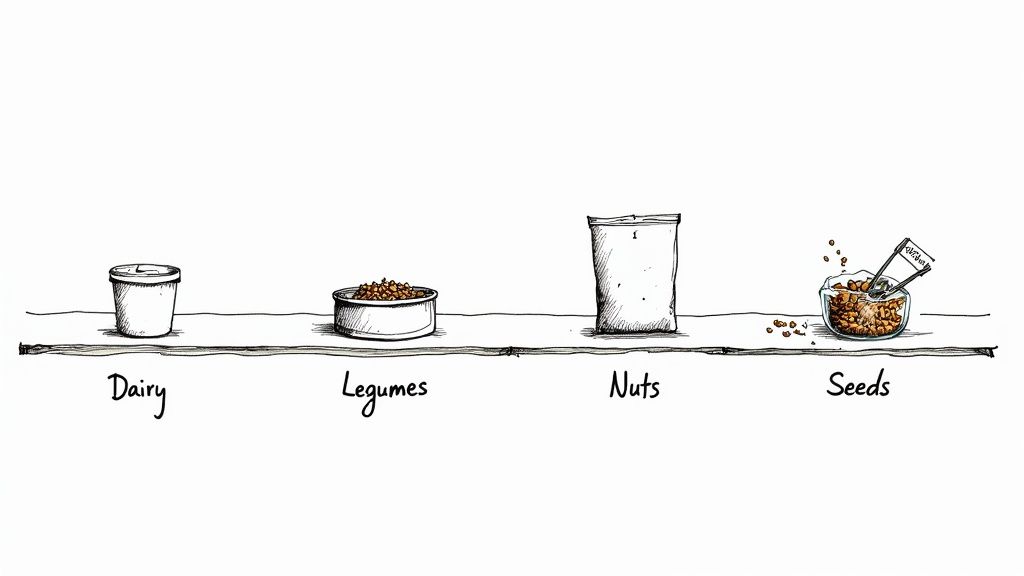
To make your shopping trips quicker and more efficient, organise your list by food type. This helps you move through the store logically and ensures you cover all your bases for creating delicious, balanced protein snacks at home.
Legumes and Pulses:
- Tinned chickpeas and lentils (perfect for roasting or whipping up hummus)
- Frozen edamame pods
- Dried beans for batch cooking
Nuts and Seeds:
- Almonds, walnuts, and cashews (go for raw and unsalted)
- Pumpkin, chia, and flax seeds
- Nut butter powder (a great lower-fat option for pre-workout snacks)
Dairy and Alternatives:
- Plain Greek yoghurt or Skyr
- Cottage cheese
- Firm tofu and tempeh
Finally, remember that shopping on a budget doesn't mean you have to compromise on quality. Prioritise whole foods over pre-packaged, processed snacks whenever you can; they are almost always cheaper and more nutritious. Buy things like nuts, seeds, and dried beans in bulk for some serious savings. With this strategic approach, you'll fill your kitchen with healthy, cost-effective options every time.
Enhancing Your Snacks for Better Energy
High-quality, whole-food protein veg snacks are the perfect foundation for keeping your energy levels steady throughout the day. But what if you want an extra edge for your performance and focus? That’s where you can get smart by pairing your snacks with targeted supplements. This isn’t about replacing good food; it’s about making it work even harder for you.
Think of it like this: protein gives your body the essential ‘bricks’ it needs to repair muscle and feel full. A high-quality supplement, on the other hand, can act like the ‘workers’ on site—supercharging the processes that manage your energy production and mental clarity right down at the cellular level.
A Strategic Boost for Mind and Body
When you combine a nutrient-dense snack with a supplement like Oji Shilajit, you create a powerful partnership. Shilajit, a natural resin packed with fulvic acid and over 85 trace minerals, is renowned for supporting the body's energy cycle. It essentially helps your cells produce energy more efficiently, which you’ll feel as better physical stamina and sharper thinking.
This combination gives you a more complete approach to vitality. The protein snack refuels your muscles and keeps your blood sugar stable, while the shilajit gets to work behind the scenes, optimising your internal energy systems.
This strategic pairing allows you to tackle energy from two angles. You're providing the raw materials for fuel (protein and nutrients) while simultaneously improving the machinery that converts that fuel into usable power for your body and brain.
It’s a particularly brilliant way to tackle that all-too-common mid-afternoon slump, when both physical energy and mental focus often take a nosedive.
Practical Ways to Pair Your Snacks
You don’t need to overcomplicate things. The easiest way to bring a supplement into your routine is to link it with a snacking habit you already have. That way, it becomes an effortless upgrade, not another thing to add to your to-do list.
Here are a few simple actions to get you started:
- Morning Smoothie Power-Up: As you’re blending your morning protein smoothie, just add your daily dose of shilajit. It’s a great way to lay the groundwork for sustained energy and mental clarity that will see you through the morning and beyond.
- Mid-Afternoon Focus Fix: Have your supplement with a mid-afternoon snack of almonds or walnuts. The nuts provide a steady release of energy from their protein and healthy fats, while the shilajit can help you fight off mental fatigue and stay sharp for the rest of the workday.
- Pre-Workout Endurance Boost: Take your shilajit with a pre-workout snack, like a small pot of Greek yoghurt. You’re preparing your body for action by giving it immediate muscle fuel and supporting the deeper cellular energy production needed for a great session.
With this one small tweak, you can turn your reliable protein veg snacks into a much more potent tool for supporting your overall vitality, physical endurance, and mental performance all day long.
Of course. Here is the rewritten section, designed to sound like it was written by an experienced human expert, following your specific style and formatting requirements.
Got Questions About High-Protein Veggie Snacks?
Even when you've got a great plan, a few questions always pop up when you start making a change to your diet. Let’s tackle some of the most common ones about protein veg snacks.
Think of this as your personal FAQ. We’ll cover everything from hitting your protein goals to finding options that are gentle on your stomach, so you can feel totally confident in your snacking choices.
Can I Really Get Enough Protein from Vegetarian Snacks Alone?
While your main meals are the foundation, high-protein vegetarian snacks are the secret weapon for hitting your daily goals. Choose your snacks wisely—think Greek yoghurt, edamame, or a decent protein bar—to easily add an extra 10-25 grams of quality protein to your day.
For most of us, the best approach is combining protein-rich meals with a couple of well-timed snacks. It’s a much more sustainable way to meet your targets without feeling stuffed after every meal, and it keeps your energy levels nice and steady. A little bit of planning is all it takes.
Are All Plant-Based Protein Bars Actually Healthy?
Definitely not. ‘Plant-based’ or ‘high-protein’ can be marketing buzzwords slapped on what is essentially a glorified chocolate bar, loaded with sugar, artificial sweeteners, or rubbish fats. This is where reading the label becomes non-negotiable.
A genuinely healthy protein bar should have a short ingredient list you can actually recognise. Always look for bars with at least 15g of protein, a good dose of fibre (aim for 5g or more), and minimal added sugar—ideally under 10g. The best ones are made from whole foods like nuts, seeds, and simple pea or brown rice protein.
What Are the Best Protein Veg Snacks for a Sensitive Stomach?
If you find that some foods don't agree with you, the trick is to lean into protein sources that are known for being easy to digest. That way, you get all the benefits without any of the discomfort.
- Go for smooth textures: Things like smooth nut butters or blended smoothies are often much kinder to your gut than a handful of whole, raw nuts.
- Stick to cooked sources: A small portion of well-cooked lentils or chickpeas is usually better tolerated than a big bowl of raw beans.
- Try out dairy and soy: If you’re okay with dairy, Greek yoghurt is fantastic. Firm, cooked tofu is another excellent, gentle option.
Start with smaller snack portions and just listen to your body. You'll quickly figure out which protein veg snacks are your friends, without overwhelming your system.
For a truly powerful boost to your energy and mental clarity, consider pairing your healthy snacks with Oji Shilajit. Our enhanced Shilajit gummies are designed to support your body's natural vitality, helping you feel your best from the inside out. Discover the difference at https://myoji.co.uk.


