

If you’ve ever felt like your mind is stuck in a thick, soupy fog, you’re not alone. It’s a common experience known as brain fog, a type of cognitive dysfunction that can leave you feeling mentally slow and scattered. Recognising the symptoms of brain fog is the first actionable step toward clearing the clouds and regaining your mental sharpness.
What Brain Fog Actually Feels Like
Trying to describe brain fog to someone who hasn't felt it can be tricky. It's more than an "off day"; it's a persistent cloudiness that dulls your mental edge. Taking a moment to identify exactly how it feels for you is a crucial first step.
Imagine you're trying to run the latest, most demanding software on a computer from a decade ago. The system freezes, lags, and struggles to process even simple commands. That’s what brain fog feels like. The thoughts are there, somewhere, but your brain’s processing power just can’t seem to keep up.
This mental slowdown has real, tangible effects on your day. You might find yourself reading the same sentence over and over, losing the thread of a conversation midway through, or feeling completely paralysed by simple decisions like what to have for lunch. It’s as if your thoughts are moving through treacle.
This feeling of being "stuck" is at the very heart of the brain fog experience. Acknowledging this frustration is the starting point for taking control. By identifying this feeling, you can begin to look for patterns and triggers.
Just knowing that what you're feeling is a real phenomenon is empowering. Understanding what it is and how it shows up is your first action toward clearing the clouds.
Common Sensations of Brain Fog
Brain fog feels different for everyone, but there are common threads. Use this table to put a name to what you're going through. Pinpointing the sensation is an action that helps you move from feeling overwhelmed to actively seeking a solution.
Here’s a breakdown of the feelings people most often report when they're in the thick of it.
| Sensation | What It Feels Like |
|---|---|
| Mental Slowness | Your thoughts feel sluggish and heavy, as if you're thinking through mud. |
| Word-Finding Difficulty | The perfect word is right on the tip of your tongue but you just can't grab it. |
| Feeling Disconnected | You feel detached from your surroundings, like you're watching your own life from a distance. |
| Overwhelm | Simple tasks or decisions feel impossibly complex and mentally draining. |
| Lack of Sharpness | Your thinking feels fuzzy or dull, instead of the clear, precise focus you're used to. |
Recognising these patterns is a huge step. When you can pinpoint exactly how brain fog is affecting you, you're in a much better position to figure out what's causing it and what you can do about it.
Key Symptoms of Brain Fog to Recognise

While the feeling of brain fog can seem vague, its symptoms are specific and disruptive. Your first action is to identify which of these signs are impacting you. Think of them as signals from your body telling you something is off balance and needs your attention.
These symptoms are more than just annoyances. They’re tangible signs that your mind isn't running on all cylinders. This isn't a personal failure; it's a call to action to investigate your lifestyle, stress levels, or underlying health.
Let's break down the most common symptoms and see if they sound familiar.
You Constantly Struggle with Your Memory
This is one of the classic signs of brain fog. It’s more than occasionally misplacing your keys; it's a persistent pattern. If you notice these memory issues, your next action is to start tracking them.
- Forgetting appointments or important dates, even if you’ve written them down.
- Struggling to remember names of people you've met several times.
- Losing track of your personal belongings like your phone, wallet, or glasses almost daily.
These memory slip-ups are a core sign that your mind is overloaded. Your action step is to create systems to support your memory, like setting phone reminders or using a physical planner, while you work on the root cause.
You Find It Difficult to Concentrate
Losing focus is another hallmark of a foggy mind. This isn't just getting distracted by a notification; it's a deeper inability to keep your attention locked on one thing. You might find yourself re-reading the same sentence over and over without any of it sinking in.
This profound difficulty with focus is a huge indicator of brain fog. Recognise this not as a lack of willpower, but as a signal to take action to reduce cognitive load and support your brain's attention systems.
This challenge with concentration is remarkably common. Research from a UK study found that difficulty focusing makes it more than three times as likely for someone to report experiencing brain fog. The same study noted that people with these symptoms were also more likely to forget appointments and struggle to follow conversations, showing just how interconnected these issues are. You can read more about these UK-based findings on brain fog symptoms.
You Feel Mentally Exhausted and Confused
Brain fog often brings a heavy sense of mental fatigue that sleep just doesn't seem to touch. Even after a full night’s rest, your mind can feel sluggish. This isn't physical tiredness—it's cognitive exhaustion that makes thinking feel like wading through mud.
This exhaustion can lead to confusion. If you find yourself struggling to process information or follow simple instructions, your next action is to simplify your tasks. Break down big projects into smaller, manageable steps to reduce the mental effort. This vicious cycle—fatigue causing confusion, and confusion causing more fatigue—can be broken by taking small, deliberate actions.
Understanding the Causes of Your Brain Fog
To lift the mental haze, you must first figure out where it’s coming from. Pinpointing the cause is the most critical action you can take. Brain fog is a signal from your body that something is out of balance, and your job is to become a detective.
The causes usually fall into two main camps: everyday lifestyle factors you can change, and underlying medical conditions that need a doctor’s help. Your first action is to audit your own habits. For a more detailed look, we've put together a full guide on what causes brain fog.
This infographic breaks down the most common lifestyle culprits that feed brain fog.
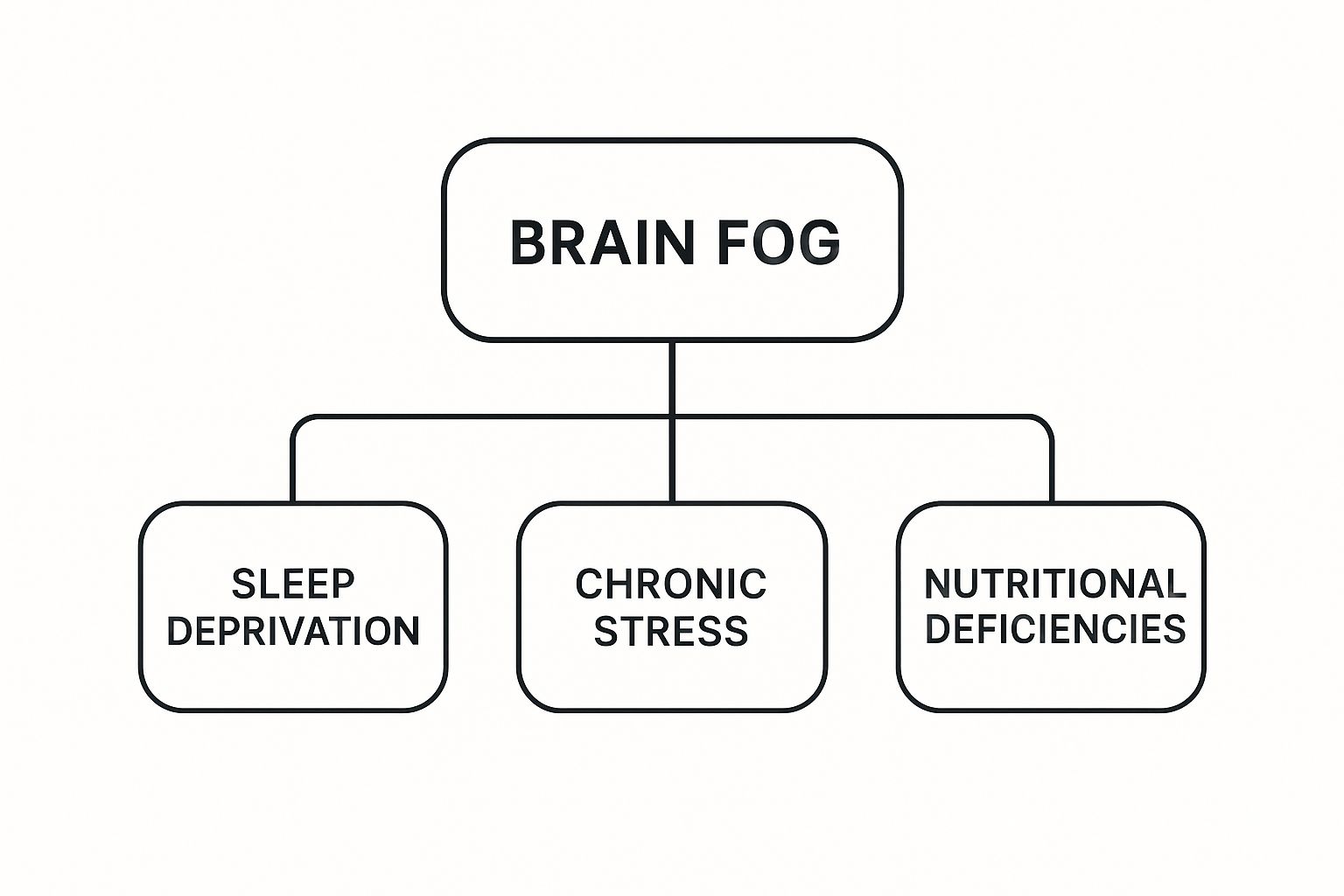
As you can see, foundational habits like sleep, stress, and what you eat have a huge impact. For many people, taking action here is the key to clearing the fog.
Lifestyle Factors and Daily Habits
More often than not, the roots of brain fog are tangled up in our daily routines. The good news? You have direct control over these factors. Start by evaluating these three areas.
-
Chronic Stress: When you’re constantly under pressure, your body pumps out cortisol. Your action step is to actively schedule "downtime" into your day—even just five minutes of quiet breathing—to lower cortisol levels and give your brain a break.
-
Poor Sleep: Sleep is your brain’s nightly cleaning service. If your sleep is poor, your actionable task is to create a non-negotiable sleep routine. This means a consistent bedtime and wake-up time, even on weekends.
-
Nutritional Deficiencies: Your brain is a powerhouse, but it needs premium fuel. A diet heavy in processed foods can starve your brain. Your immediate action is to add one brain-healthy food, like a handful of walnuts or a serving of leafy greens, to your diet each day.
Think of your brain like a high-performance engine. Your daily actions—what you eat, how you manage stress, and the quality of your sleep—are the maintenance that keeps it running smoothly. Don't wait for it to sputter; be proactive.
Underlying Medical Conditions
Sometimes, brain fog is a red flag for a deeper medical issue. If your lifestyle audit doesn't reveal an obvious cause, your next action is to consider if something else is at play.
Hormonal shifts, especially during menopause or with thyroid problems, can wreak havoc on your thinking. An underactive thyroid (hypothyroidism), for instance, slows down your entire metabolism, including your brain's processing speed.
Brain fog is also a key symptom of Myalgic Encephalomyelitis/Chronic Fatigue Syndrome (ME/CFS). Research looking at NHS data in England revealed that around 404,000 people live with ME/CFS, and for many, the "brain fog" is a debilitating symptom.
By understanding these potential triggers, you can go from feeling powerless to playing an active role in clearing your head and reclaiming your focus.
Brain Fog After COVID-19 and Other Infections
Have you ever felt like your mental sharpness just didn't quite return after a nasty bug? Post-viral brain fog, especially after COVID-19, is a real and frustrating experience. Understanding the cause is the first step toward taking effective action.
The connection between infections and a foggy mind often boils down to one word: inflammation. When your body fights off a virus, it launches a full-scale immune assault. Sometimes, this response leads to widespread inflammation that can cross into the brain. Your goal is to take actions that help your body regulate this inflammatory response.
The Reality of Long COVID Brain Fog
If you're dealing with this, let's be clear: you are not imagining it. The mental haze that can follow an infection like COVID-19 is a legitimate medical issue, often called 'Long COVID'. It's incredibly frustrating, marked by memory slips and a struggle to concentrate.
This has become a widespread problem. Here in the UK, brain fog is one of the most reported symptoms for those recovering from COVID-19. A major analysis revealed that a staggering 23.3% of people were still reporting brain fog a full twelve months after their initial infection. What’s really interesting is that this was more common in people who weren't hospitalised (29.7%) compared to those who were (19.5%). This just goes to show that even a "mild" case can have significant long-term cognitive effects. You can explore the complete study on post-COVID cognitive symptoms to see the data for yourself.
Prevention and Managing Post-Viral Symptoms
Understanding that inflammation is the likely culprit gives us a clear path forward. While you can't bubble-wrap yourself to avoid every illness, you can take smart, proactive steps to support your body and reduce the risk of long-term mental fog.
One of the most powerful findings from recent studies is the role of prevention. Researchers found that the incidence of brain fog dropped significantly—by up to 3.7 times—in populations with higher COVID-19 vaccination rates.
This tells us that being proactive is key. Your action plan should include supporting your immune system with a balanced diet, making restorative sleep a priority, and managing stress. These fundamentals help your body regulate its inflammatory response, both during and after an illness, giving you the best chance to clear the fog.
Actionable Steps to Clear Brain Fog

Knowing what brain fog feels like is one thing, but actually doing something about it is where real change happens. This is your chance to fight back. Shaking off brain fog isn’t about finding a single magic bullet; it's about making small, consistent lifestyle tweaks that bring back your mental clarity.
Think of your mind like a garden. You can’t just hope for beautiful flowers—you need to tend the soil, water the plants, and ensure they get enough sun. Your brain is no different; it needs the right actions to thrive. These steps are your personal guide to creating an environment where your mind can flourish.
Every strategy here is a sustainable change you can start making today. Let's get into the practical steps that will make a real, noticeable difference.
Fuel Your Brain with the Right Nutrients
What you put on your plate has a direct and powerful effect on how clearly you think. A diet loaded with processed foods, sugar, and unhealthy fats can fire up inflammation. The action is to swap these for brain-boosting foods that protect your mind and sharpen your focus.
Start by bringing more anti-inflammatory foods into your daily meals.
- Omega-3 Fatty Acids: Actively add oily fish like salmon, or plant-based sources like walnuts and flaxseeds, to your weekly shopping list. These fats are essential for building brain cells.
- Antioxidant-Rich Berries: Make blueberries a regular snack. Their compounds shield the brain from stress and improve how your brain cells communicate.
- Leafy Greens: Incorporate spinach and kale into your meals. They're packed with folate and vitamin K, which are linked to better brain function.
Making these simple swaps in your diet can turn down the volume on that internal static that’s clouding your thoughts.
Prioritise Restorative Sleep Hygiene
Sleep is when your brain does its essential nightly maintenance. Cut your sleep short, and you disrupt these critical processes. Improving your sleep hygiene is one of the most powerful actions you can take.
A consistent sleep routine is non-negotiable for mental clarity. Your task is to go to bed and wake up at the same time every day—yes, even on weekends—to regulate your body's internal clock for deeper, more restorative rest.
Beyond a schedule, take action to create a sleep sanctuary. Make your bedroom a cool, dark, and quiet retreat. Put away screens at least an hour before bed. The blue light they emit interferes with melatonin, the hormone that signals it's time to sleep.
Manage Stress with Mindfulness
Chronic stress is a well-known trigger for brain fog, flooding your system with cortisol. Learning to manage your stress is an absolutely vital action.
Mindfulness and meditation are brilliant tools for calming your nervous system. Commit to 5-10 minutes of focused breathing each day to lower cortisol and improve concentration. This simple practice trains your brain to stay present, cutting through mental clutter.
Gentle exercise like walking or yoga is another fantastic action for beating stress while boosting blood flow to your brain. For a deeper dive into more practical strategies, check out our guide on how to clear brain fog effectively. By taking these small, deliberate steps, you can feel more in control and bring back your mental sharpness.
When to Talk to Your Doctor About Brain Fog
Making lifestyle changes is a fantastic first step. But sometimes, they aren't enough. It's important to know when to take the next action: calling in a professional.
If you’ve been making healthy changes for a few weeks and the brain fog just won’t lift, that’s a clear sign you need to book an appointment. This is especially true if you’re noticing other worrying symptoms alongside the mental fuzziness.
Think of it like a smoke alarm for your health. A bit of mental haze after a rough night's sleep is one thing. Persistent brain fog, especially when paired with other issues, is an alarm bell that requires your immediate action.
Spotting the Red Flags
There are some symptoms that should prompt you to seek medical care immediately. If your brain fog appears with any of the following, please get it checked out promptly:
- Intense or unusual headaches
- Sudden numbness or tingling in your limbs
- Unexplained weight changes
- Vision problems or fainting spells
How to Prepare for Your Appointment
To get the most out of your visit, a little preparation goes a long way. Your action here is to keep a simple journal to track your symptoms. Make a note of when your brain fog feels worst, what you were doing at the time, and what you’d eaten that day.
This simple log gives your doctor a treasure trove of information, helping them spot patterns. Being organised is one of the best ways to advocate for your own health and get the specific support you need.
Common Questions About Brain Fog

It’s completely normal to have questions when you’re dealing with something as frustrating as brain fog. Getting straight answers is an important step towards taking effective action.
How Long Does Brain Fog Usually Last?
This is the big question, and the answer depends on the cause. If it's from a short-term issue like a stressful week or jet lag, the fog usually lifts once you take action to resolve the trigger (e.g., getting proper rest).
However, if your brain fog is tied to a chronic condition, a nutritional gap, or Long COVID, it can persist for months. The key is to take action to identify and manage the root cause. Once you do, the clouds can finally begin to part.
Can My Diet Really Make a Difference?
Absolutely. The link between your gut and brain is incredibly strong. A diet heavy on processed foods can fuel inflammation. The most effective action you can take is to shift your diet.
Shifting to an anti-inflammatory diet full of things like fatty fish, colourful vegetables, and berries gives your brain the high-quality fuel it needs to fire on all cylinders. This is a simple but powerful action for improving your mental clarity.
If you’re keen to learn more about how food and other lifestyle tweaks can help, you might find our guide on 8 natural remedies for brain fog that work in 2025 really useful.
Is Brain Fog a Sign of Something Serious?
While often linked to lifestyle, persistent brain fog should not be ignored. Think of it as a check-engine light for your body. If it’s severe, getting worse, or showing up with other worrying symptoms, your next action should be to seek medical advice.
If you’ve taken action to adjust your sleep, diet, and stress levels and the fog still won’t lift, that’s your cue. It’s time to have a chat with a healthcare professional to get a proper diagnosis and rule out anything more serious.
Ready to reclaim your mental clarity and boost your natural energy? Oji Shilajit offers enhanced Shilajit gummies designed to support focus, reduce stress, and restore your vitality. Discover the difference at https://myoji.co.uk.


