
Thinking about balancing hormones can seem complex, but what if the most effective steps start on your plate? Key nutrients like B vitamins, Vitamin D, and Magnesium are the essential tools your body needs to produce and regulate its hormones, supporting everything from your stress response to your cycle.
Your Hormones Are Like an Orchestra
Picture your body’s hormones as a finely-tuned orchestra. Key players like oestrogen, progesterone, cortisol, and thyroid hormones all need to work together perfectly. When just one is out of tune—either too high or too low—the entire performance is thrown off.
That "off" feeling is what you experience as nagging fatigue, unpredictable moods, or an irregular cycle. This guide provides actionable steps to help you become the conductor of your own hormonal orchestra, showing you how specific vitamins to balance hormones for females can restore harmony.
The Real Building Blocks of Balance
Hormones don't just appear out of nowhere. Your body makes them from the nutrients you consume. Think of vitamins and minerals as the essential ingredients and the spark plugs that kickstart the entire process.
For example, if you're low on B vitamins, your liver struggles to clear out old oestrogen. And Vitamin D? It acts less like a vitamin and more like a hormone itself, directly influencing your cells and reproductive health.
Actionable step: Acknowledge that what you eat directly impacts your body's ability to create, use, and eliminate hormones. A shortfall in just one nutrient can disrupt the entire system.
Taking control starts here. It’s not about masking symptoms; it’s about giving your body the raw materials it needs to function correctly.
For a deeper look into how it all connects, you can explore understanding the intricate connection between your nervous system and hormonal balance.
Why Food Always Comes First
Before reaching for supplements, make your diet the main event. Real, whole foods offer a complete package of vitamins, minerals, and fibre that work together synergistically. However, modern life can create nutritional gaps.
- Chronic Stress: Juggling daily demands raises cortisol, which depletes your stores of magnesium and B vitamins rapidly.
- Soil Depletion: Modern agricultural soils are often less nutrient-rich, meaning the fruit and veg we eat may contain fewer vitamins and minerals than they once did.
- Life's Demands: Certain life stages, like perimenopause or periods of intense exercise, increase your body's demand for specific nutrients.
This guide will break down exactly which nutrients pack the biggest punch and how they work, giving you a clear roadmap to feeling your best.
The Four Essential Vitamin Groups for Hormone Support
Navigating which vitamins can help balance your hormones can feel overwhelming. The good news is that a few key groups do most of the heavy lifting. Think of these vitamins as the essential crew that keeps your body’s complex hormonal assembly line running smoothly. By focusing on these four powerhouses, you can build a solid foundation for your overall well-being.
This chart shows how common struggles like fatigue, mood swings, and irregular cycles are often signs of a deeper hormonal imbalance—and how specific vitamins can provide targeted support.
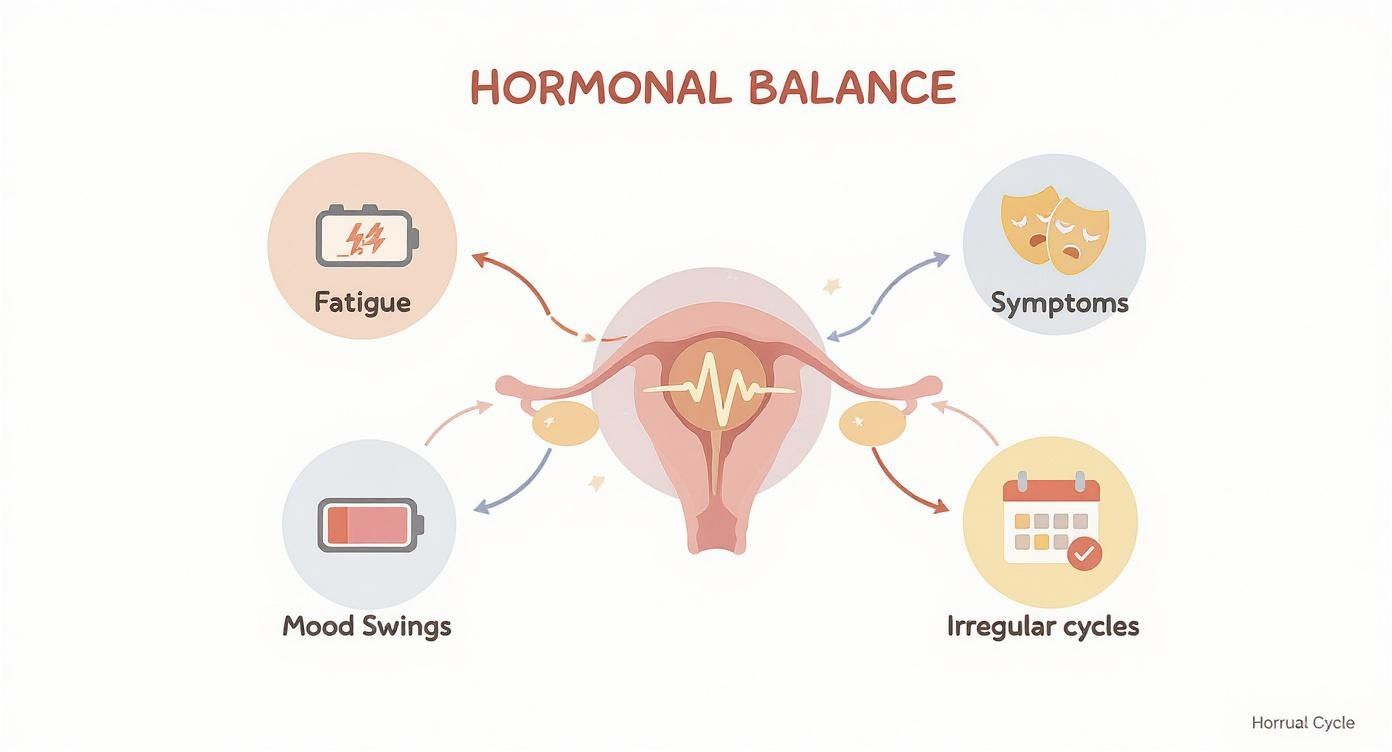
As you can see, these symptoms don't exist in a vacuum. They’re often connected, stemming from a central hormonal disruption that the right nutrition can help correct.
B Vitamins: The Stress and Detox Crew
The B-vitamin family is a team of eight nutrients that work together. They are your body's best multi-taskers, crucial for producing energy, maintaining brain function, and—most importantly—metabolising hormones.
Two of their roles are particularly vital for hormonal balance. First, they are non-negotiable for a healthy liver. Your liver is responsible for breaking down and clearing out hormones after they've done their job. If you're low on B vitamins, especially B6, B9 (folate), and B12, this detoxification process slows down. This can lead to a build-up of "used" hormones like oestrogen, a common culprit behind PMS and other imbalances.
Secondly, B vitamins are fuel for your adrenal glands. During chronic stress, your body burns through B vitamins to produce cortisol. If you run low, you're left feeling exhausted and less resilient to stress, creating a vicious cycle of hormonal chaos. Maintaining adequate B vitamin levels ensures your adrenals have what they need to function properly.
Vitamin D: The Sunshine Pro-Hormone
We call it a vitamin, but Vitamin D acts more like a pro-hormone in the body—a building block that your body converts into a hormone. Its influence is massive, affecting everything from bone health and immunity to, critically, female reproductive health.
Vitamin D receptors are found on cells throughout the body, including in the ovaries and the pituitary gland (the master controller of your endocrine system). This gives it a direct role in regulating menstrual cycles and supporting ovulation. Research consistently links healthy Vitamin D levels with better fertility outcomes and a lower risk of conditions like PCOS.
Here in the UK, getting enough Vitamin D is a real challenge, especially during the darker winter months. This common deficiency can quietly disrupt hormonal pathways, making it a key nutrient to focus on.
This is especially true for women at different life stages. For instance, the UK's National Diet and Nutrition Survey found that 27% of women aged 45 to 64 had Vitamin D levels below the recommended threshold. The same survey revealed that around 42% of women in this age group were taking at least one dietary supplement, showing a clear and growing awareness of the need for nutritional support. You can see more on these trends in the menopause statistics from Chemist-4-U.
Vitamin C: The Adrenal and Progesterone Protector
Most of us associate Vitamin C with immune support, but it’s a powerhouse for hormonal health too. Your adrenal glands—which produce stress hormones like cortisol and sex hormones like DHEA—contain one of the highest concentrations of Vitamin C in the body.
When you're stressed, your body uses up Vitamin C to make cortisol. If your intake is low, adrenal function can suffer, leaving you feeling wiped out and creating further hormonal imbalance. Ensuring you get enough Vitamin C provides your adrenals with the raw materials they need to manage stress effectively.
Additionally, Vitamin C helps support progesterone levels. It works as an antioxidant, protecting ovarian cells from damage and supporting the health of the corpus luteum—the structure that produces progesterone after ovulation. Healthy progesterone is key for a regular cycle and a calmer mood.
Vitamin E: The Oestrogen Modulator and Symptom Soother
Vitamin E is a fat-soluble antioxidant known for its ability to fight oxidative stress, which can damage cells and disrupt hormonal signals. It’s particularly helpful for managing symptoms tied to oestrogen fluctuations.
For those dealing with PMS, Vitamin E has been shown to help ease common complaints like breast tenderness and cramping. Its anti-inflammatory properties can significantly soothe the discomfort associated with that time of the month.
It can be especially useful during perimenopause and menopause, when oestrogen levels decline unpredictably. Studies suggest it can help reduce the frequency and severity of hot flushes and night sweats, two of the most disruptive symptoms of this transition. By protecting cells and taming inflammation, it helps the body adapt more smoothly to its new hormonal landscape. For more guidance, check out our guide on how to choose the best vitamin for hormone imbalance.
To bring this all together, here is a quick summary of how these essential vitamin groups support your hormonal health.
| Vitamin Group | Primary Hormonal Role | Key Benefits | Common Deficiency Signs |
|---|---|---|---|
| B Vitamins | Stress management, hormone metabolism, and liver detox. | Boosts energy, supports adrenal function, and helps clear excess oestrogen. | Fatigue, mood swings, anxiety, brain fog, and severe PMS. |
| Vitamin D | Acts as a pro-hormone, regulating menstrual cycles and ovulation. | Supports fertility, balances mood, and strengthens immune function. | Irregular cycles, low mood, frequent illness, and bone pain. |
| Vitamin C | Supports adrenal function and progesterone production. | Helps manage stress, reduces fatigue, and supports a healthy luteal phase. | Chronic fatigue, bruising easily, slow wound healing, and irritability. |
| Vitamin E | Modulates oestrogen and reduces inflammation. | Alleviates PMS symptoms, reduces hot flushes, and protects cells from damage. | Breast tenderness, dry skin, muscle weakness, and leg cramps. |
Understanding these key players is the first step toward using nutrition to feel your best. Each one has a unique and vital role in keeping your intricate hormonal system in harmony.
Essential Minerals That Enhance Vitamin Performance
Vitamins rarely work in isolation. Think of them as star players on a team; they need a solid support crew to perform at their best. For vitamins, that support crew comes in the form of minerals. These minerals act as essential partners, unlocking the full potential of every vitamin you consume.
Without these crucial mineral co-factors, even a vitamin-rich diet or a consistent supplement routine can fall short. Let's dive into the key minerals that work hand-in-hand with vitamins to help balance female hormones.
Magnesium: The Calming Mineral
Magnesium is often called the 'calming mineral' for a reason. It’s involved in over 300 biochemical reactions in the body, many of which are critical for managing stress and regulating hormones. When you're stressed, your body burns through magnesium to produce cortisol, which can leave you feeling anxious and depleted.
This mineral is also the key that unlocks Vitamin D. Your body cannot convert the Vitamin D you get from sunshine or supplements into its active form without enough magnesium. You could be taking plenty of Vitamin D, but if you're low on magnesium, you won't get its full hormonal benefits.
Actionable step: Prioritize magnesium-rich foods like leafy greens, nuts, and seeds to support both stress management and Vitamin D activation. Think of magnesium as the switch that turns on the Vitamin D lightbulb.
By calming the nervous system and activating Vitamin D, magnesium directly supports both your stress response and your reproductive hormone pathways.
Zinc: The Ovarian and Thyroid Regulator
Zinc is a powerhouse mineral that plays a central role in both ovarian function and thyroid health. It's essential for producing follicle-stimulating hormone (FSH), the signal sent from the pituitary gland telling your ovaries to prepare an egg for ovulation.
Without enough zinc, this communication can break down, leading to irregular cycles. It also helps regulate testosterone and is crucial for keeping inflammation in check—a key factor in conditions like PCOS.
Beyond the ovaries, your thyroid needs zinc to produce its hormones. A deficiency can slow thyroid function, leading to symptoms like fatigue, weight gain, and low mood, which often overlap with other hormonal imbalances.
Selenium: The Thyroid Converter
While zinc helps produce thyroid hormones, selenium is the mineral that activates them. Your thyroid mostly produces an inactive hormone called T4. For your body to use it, it must be converted into the active form, T3. Selenium is a critical part of the enzyme that makes this conversion happen.
A selenium deficiency means that even if your thyroid is producing enough T4, your body can't use it effectively, leading to symptoms of an underactive thyroid. This mineral is also a powerful antioxidant, protecting the thyroid gland from damage. To learn more about how these micronutrients work, explore the benefits of trace minerals in our detailed guide.
Omega-3 Fatty Acids: The Hormone Building Blocks
While not technically a mineral, omega-3 fatty acids are so essential for hormone health that they belong on this support team. These healthy fats are the literal building blocks of many hormones, including oestrogen and progesterone. A steady supply ensures your body has the raw materials it needs for production.
Omega-3s are also famous for their powerful anti-inflammatory properties. Chronic inflammation can disrupt hormonal signalling and worsen symptoms of PMS, period pain, and menopause. By taming inflammation, omega-3s help create a calmer internal environment where your hormones can communicate more effectively.
Your Nutritional Needs Change with Every Chapter
Your body’s hormonal needs are not static—they shift with you through every stage of life. The nutritional plan that worked in your twenties will likely need adjustments in your forties and beyond. Learning to recognise these changes and adapt your vitamin and mineral intake is a powerful way to support your body.
This isn’t about starting over. Think of it as routine maintenance for a car; you’re making targeted adjustments to keep the engine running smoothly. By understanding what your body needs at each stage, you can provide the exact support required to stay in harmony.
Getting ahead of these changes means you can manage common issues before they take over, from regulating your cycle in your reproductive years to soothing the symptoms of menopause.
Keeping Things Smooth in Your Reproductive Years
During your reproductive years, the primary goal is maintaining a regular, healthy menstrual cycle. Balancing your hormones is key to managing PMS, boosting fertility, and addressing conditions like polycystic ovary syndrome (PCOS). A few specific nutrients can be game-changers here.
Inositol, which is similar to a B-vitamin, and Vitamin D are two of the most well-researched nutrients for cycle regularity. They work together to help your body use insulin more effectively—and insulin significantly impacts how your ovaries function.
In the UK, studies have explored how vitamin intake can help manage PCOS, a common hormonal issue affecting up to 12% of women of reproductive age. One recent analysis found that women with PCOS who took both vitamin D and inositol saw a 30% improvement in menstrual regularity and a 25% drop in insulin resistance compared to those who didn't. You can read more about the research on how these therapies impact hormonal conditions.
Navigating Perimenopause and Menopause
When you enter perimenopause and menopause, your hormonal landscape undergoes a massive shift. Oestrogen and progesterone levels fluctuate before declining, bringing on challenges like hot flashes, sleepless nights, and low energy. Your nutritional game plan should shift to manage these symptoms and support your long-term health.
This is where certain vitamins and minerals really shine, acting as a support crew to help your body adjust more comfortably.
Actionable step: Reframe this transition not as a loss, but as a recalibration. Your body is finding a new equilibrium. Use targeted nutrition to give it the tools to make that adjustment feel much smoother.
The focus now is on calming the nervous system, taming inflammation, and supporting your body's new hormonal baseline.
Here are a few key players to add to your team during this stage:
- Vitamin E for Hot Flashes: A powerful antioxidant, Vitamin E helps protect your cells from stress. It's also been shown to reduce the intensity and frequency of hot flashes and night sweats.
- B Vitamins for Energy: As oestrogen drops, it can affect your brain's feel-good chemicals, leading to fatigue. B-complex vitamins, especially B6 and B12, are essential for energy production and can help combat that persistent tired feeling.
- Magnesium for Sleep and Calm: Magnesium is a superstar for this chapter. It helps soothe the nervous system to ease anxiety and plays a direct role in promoting deeper, more restorative sleep—a common struggle during menopause.
Building Your Personalised Hormone Support Plan
Knowing what helps is one thing; putting that knowledge into practice is what creates real change for your hormones. Creating a personalised plan is about making small, consistent choices that add up over time. The goal is to build a simple framework that fits your life and targets your symptoms.
The best place to start is always with food. Before considering supplements, evaluate your plate. Building meals around hormone-supportive vitamins and minerals creates a solid foundation. Supplements can then work their magic on top of that foundation.
Step 1: Start with a Food-First Mindset
The first step is a simple audit of what you're eating. The aim is to pack your meals with nutrient-dense foods to naturally increase your intake of the key vitamins to balance hormones for females.
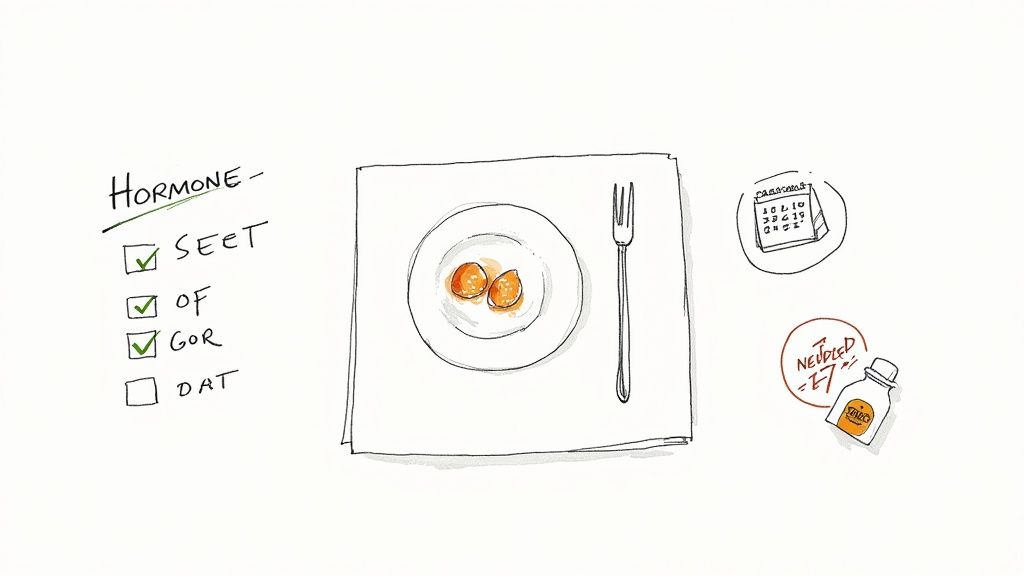
Here’s a quick checklist to get you started:
- Leafy Greens: Add a large handful of spinach or kale to your morning smoothie or lunch salad. It’s an easy way to get a boost of magnesium and B vitamins.
- Healthy Fats: Incorporate avocado, nuts, seeds, and oily fish like salmon into your week. These are essential for producing hormones and absorbing vitamins D and E.
- Colourful Veggies: Aim to "eat the rainbow" by including foods like bell peppers, sweet potatoes, and berries. The different colours provide a wide range of antioxidants and Vitamin C.
- Quality Protein: Include a portion of protein—like eggs, lentils, or chicken—with every meal to support your liver and stabilise your blood sugar.
Actionable step: A hormone-friendly plate isn't about restriction; it's about addition. Focus on what you can add to your meals to give your body the building blocks it needs.
Step 2: Smart and Safe Supplementation
While food is the foundation, a targeted approach is sometimes necessary. Supplements can deliver therapeutic doses of specific nutrients that are difficult to get from diet alone. For example, vitamin E and omega-3s are receiving significant attention for supporting women through menopause in the UK.
One trial found that women taking 400 IU of vitamin E daily experienced a 35% drop in hot flushes. Another showed that those taking omega-3s reported a 28% improvement in their mood, demonstrating how the right supplement can offer targeted relief.
When you decide to add supplements, quality is paramount.
Here’s what to look for:
- Read the Label Carefully: Check for the active form of a nutrient (like methylcobalamin for B12 or magnesium glycinate for better absorption). Avoid products with unnecessary fillers, artificial colours, and added sugars.
- Understand the Forms: Nutrients come in different forms, which affects how well your body can use them. For instance, some minerals are better absorbed when "chelated," meaning they're bound to an amino acid to help your body recognise and use them.
- Choose Reputable Brands: Select brands that are transparent about their ingredient sourcing and use third-party testing. This ensures that what's on the label is what's in the bottle.
For a deeper dive into making the right choices, check out our detailed guide on the best supplements for hormones.
Step 3: Create Consistency and Listen to Your Body
This is the most important step: be consistent. Rebalancing your hormones doesn’t happen overnight. It’s a gradual process that gives your body time to respond to the positive changes you're making.
Start small. Introduce one or two new habits at a time, like adding a supplement to your morning routine or making one specific dietary change. Keep a simple journal to track your symptoms. You’ll begin to notice small shifts in your energy, mood, and cycle. This is your body communicating with you; listening to it is the best way to build a plan that truly supports your long-term health.
Your Top Questions About Vitamins and Hormones, Answered
Deciding to use nutrition to support your hormones is a brilliant first step, and it’s natural to have questions. Let's clear up some of the most common queries so you can move forward with confidence.
How Long Until I See Results from Taking Vitamins for Hormonal Balance?
Patience and consistency are key. Unlike medication that works quickly, vitamins and minerals work by gradually rebuilding your body's natural systems. It is a long-term investment in your well-being, not a quick fix.
You will likely notice subtle shifts first, such as a bit more energy in the afternoons or a calmer mood. These early signs can appear within 4 to 6 weeks, indicating that your body is responding.
For more significant changes—like a more regular menstrual cycle, easier PMS, or fewer hot flushes—give it 3 to 6 months of consistent, daily use. Hormonal systems operate on monthly cycles, and it takes a few of these cycles to establish a new, healthier rhythm. Track your progress by jotting down your symptoms each month to observe the positive changes.
Can I Get All the Necessary Vitamins from My Diet Alone?
A diet packed with whole foods is the absolute cornerstone of hormonal health. Prioritising colourful vegetables, healthy fats, quality proteins, and high-fibre foods provides a synergy of nutrients that supplements cannot replicate.
However, modern life can make a food-only approach challenging. Chronic stress depletes nutrients like magnesium and B vitamins. Soil depletion means our food may not be as nutrient-dense as it once was. Furthermore, certain health conditions or life stages can increase your body's need for specific nutrients.
Actionable step: View your diet as the main meal providing core nourishment. Consider targeted supplements as a potent seasoning to address specific needs that your diet alone cannot satisfy.
A classic example is Vitamin D. In the UK, getting enough from food and limited sunshine is nearly impossible for much of the year. In such cases, supplementation is often essential to fill the gap and restore balance.
Are There Any Risks or Side Effects with Taking These Vitamins?
While vitamins and minerals are natural, they are powerful substances and should be treated with respect. It is possible to have too much of a good thing. Taking excessive amounts of certain nutrients, particularly the fat-soluble vitamins A, D, E, and K, can lead to toxicity because your body stores them.
It is also crucial to be aware of potential interactions with medications you may be taking. For example, some supplements can interfere with blood thinners or hormone therapies. To stay safe, always start by following the recommended dose on the label of a high-quality, third-party tested supplement.
The safest and most effective approach is to consult with a qualified healthcare professional, such as your GP or a registered nutritional therapist. They can review your health history, symptoms, and medications to help you create a plan that is both safe and effective for you.
What Is the Best Time of Day to Take Hormone-Balancing Vitamins?
Strategic timing can help you get the most out of your supplements. While consistency is most important, a few simple guidelines can boost absorption and align with their natural effects.
Here’s a simple schedule to consider:
- Morning: Take your B vitamins with breakfast. They are excellent for energy production and can give you a great start to the day.
- With a Meal: Take your fat-soluble vitamins—specifically Vitamin D and Vitamin E—with a meal that contains healthy fat (like avocado, nuts, or olive oil). Your body needs fat to absorb them properly.
- Evening: Take magnesium about an hour before bed. It has a calming effect on the nervous system and can improve sleep quality, which is crucial for hormonal health.
Ultimately, the best routine is the one you can stick to. Find a time that fits your daily life to ensure you remain consistent and give your body the steady support it needs to thrive.
A balanced diet and smart supplementation are the building blocks for hormonal health, but sometimes your body needs an extra layer of support. For anyone looking to naturally boost their energy, manage stress, and promote overall vitality, Oji Shilajit offers a unique blend of over 85 trace minerals and powerful adaptogens. Our enhanced shilajit gummies are designed to replenish the essential nutrients often missing from modern diets, supporting your journey towards hormonal harmony. Discover a simpler path to feeling your best at https://myoji.co.uk.